| Common Name: |
Common Chamomile, German Chamomile, Lawn Chamomile, Manzanilla, Maroc Chamomile, Roman Chamomile, Scented Mayweed, True Chamomile. |
| Botanical Name: |
Anthemis nobilis (Roman Chamomile), Matricaria chamomilla (German Chamomile), Ormenis multicaulis (Maroc Chamomile), Matricaria recutita |
| Family: |
Asteraceae |
| Location: |
Roman Chamomile is found in the United States, Belgium, England, France, Italy
German Chamomile is cultivated in Hungary
Maroc Chamomile is found in Northwest Africa, Spain, Israel., Near East, Asia, Europe, Australia, Africa, North and South America. |
| Origin: |
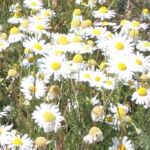
Native to the Near East and to southern and eastern Europe, chamomile today grows throughout Asia, Europe, Australia, Africa, and North and South America. The yellow-and-white flower is a common sight in meadows, alpine valleys, vacant lots and home gardens. |
| Plant Facts: |
Chamomile, a member of the daisy family, has thin, tapering roots and can grow up to 20 inches tall. This annual plant exudes a distinctive, strongly aromatic scent, and the flower has a slightly bitter taste. |
| Cultivation: |
Light, well-drained soil in full sun. Chamomile plants for lawns are planted 10cm (4in) apart and weeded regularly until established. Plants may deteriorate in very cold or wet winters, but usually recover. Chamaemelum nobile has been called "the plant's physician": ailing garden plants are supposedly cured by planting chamomile beside them, and cut flowers revive and last longer with the addition of chamomile tea to the water. An infusion is also said to prevent damping-off in seedlings. |
| Propagation: |
By seed sown in spring or autumn; by division in spring. Variants are sterile and can only be divided. |
| Harvest: |
Flowers are gathered in summer and distilled for oil, or dried for use in infusions, liquid extracts, and dermatological creams. Dried flowers keep for one year only. |
| Variation: |
Flore Pleno
(Double chamomile)
Has rather shaggy, creamy-white, double flowers.
Height: 15cm (6in)
Width: 45cm (18in)
Treneague
(Lawn chamomile)
Is a non-flowering cultivar that forms a mossy carpet. Tolerates acid soil
Height: 10cm (4in)
Width: 45cm (18in) |
| Height: |
10-30cm (4-12in) |
| Width: |
45cm (18in) |
| Hardiness: |
Z4-8 |
| History: |
The daisylike flowers of the chamomile plant are made into the most popular and widely used of all herbal teas. Chamomile tea is enjoyed by millions for its delicate aroma, soothing taste, and gentle therapeutic effects. And this love affair with chamomile has been going on for thousands of years. The ancient Egyptians, Greeks, and Romans all used the plant medicinally—for colds, chills, fevers, headaches, pain, and bladder and kidney problems. The Egyptians, who believed the plant's cluster of yellow-and-white flowers resembled the sun, declared it a sacred herb and dedicated it to Ra, their Sun god. (The great herbalist Nicholas Culpeper, who was an astrologer as well, similarly believed that chamomile was "ruled" by the sun.) The fifth-century CE Germanic settlers of the British Isles also treasured the chamomile plant, which they called maythen, and it is listed as one of the nine revered plants in an Old English manuscript called the Lacnunga.
Chamomile's common name—a derivation of the Greek chamai for "on the ground" and melon for "apple"—literally means "ground apple". Chamomile grows close to the ground and has an applelike taste and scent. By the Middle Ages, chamomile was one of the most popular of the aromatic "strewing" herbs. The strewing herbs—sage is another—were scattered inside homes to scent the rooms or planted on garden paths, where the more they were walked on, the stronger their aroma. In Spain chamomile is called manzanilla ("little apple"). And in Germany—where the herb has been researched extensively—chamomile has earned the nickname alles zutraut ("can do anything"), a tribute to its many healing benefits. |
| Drug Interactions: |
Chemotherapy, Cisplatin, Cyclophosphamide, Docetaxel, Fluorouracil, Methotrexate, Paclitaxel |
| Warning: |
Handling chamomile may cause dermatitis.
This herb, in the form of essential oil, is subject to legal restrictions in some countries. |
| Extraction: |
Steam Distillation |
| Parts Used: |
Flowers. Only the flower heads are used for tea. The flowering tops (the flower plus 2-3 inches of the stem) are used medicinally. Essential oil |
| Color and Odor: |
The German and Roman chamomiles are blue in color, while the Maroc chamomile is pale yellow. With age the Roman chamomile turns from a very pale blue to colorless. However, this change does not affect the therapeutic quality of the oil. The German chamomile remains deep blue. The blue color of the essential oils is fue to their azulene content, which is most present in German chamomile oil. (Azulene is responsible for the anti-inflammatory properties of chamomile oils.) These three essential oils have a rich, warm, distinctive fruity smell, with undertones reminiscent of over-ripe apples. |
| Background: |
The Roman and German chamomiles have a long tradition of herbal use in Europe brewed as a tea for both internal and external use. Maroc chamomile oil is a more recent introduction. It contains less azulene than the other two and is becoming popular because it is the most reasonably priced of the three. Roman chamomile is a popular lawn plant as its scent becomes more noticeable when it is walked on. |
| Components: |
Chamomile contains a volatile oil consisting of chamazulene and bisaboloids. Other ingredients include flavonoids (which have antispasmodic actions), mucilage (a gelatinous substance), bitters, coumarins, choline, sulphur and calcium. |
| Properties: |
Stomachic, hepatic, nervine, emollient, carminative, stimulant, antispasmodic, sedative, diuretic, antidepressant, antiphlogistic, anti-allergenic, anti-inflammatory, analgesic, antiseptic.
A bitter, aromatic, anti-inflammatory herb with relaxant properties that acts mainly on the digestive system. |
| Vitamin Content: |
Thiamin |
| Indications: |
Chamomile is valued for its calming, anti-inflammatory, antispasmodic and gas-relieving properties. Internally, it relieves flatulence, stomachaches, intestinal cramps and menstrual pains and promotes the healing of peptic ulcers. In addition, chamomile helps combat insomnia, as well as allay nerve pain, such as that caused by facial neuralgia. Applied externally as a compress or oil, it nourishes the skin. |
| Extra Tip: |
During hot summer months, when you may not want to drink a warm beverage, opt for chamomile ice cubes. Prepare the tea as usual, and freeze the liquid in ice-cube trays. These chamomile ice cubes will not only relieve stomach discomfort, but will cool you down. |
| Planet: |
Venus |
| Element: |
Water |
| Magical Influences: |
Money, Sleep, Love, Purification, Meditation, Peace. |
| Uses: |
- Digestive Sytem—Improves the appetite, and aids atonic dyspepsia by increasing the digestive action. Relieves the vomiting caused by gastritis and heartburn.
- Urinary System—Relieves renal inflammation and cystitis. Promotes the flow of urine and will also reduce fluid retention.
- Reproductive Sytem—Good for many disorders including scanty, painful or irregular menstruation and menopausal problems. Chamomile is soothing for sore nipples.
- Nervous System—Dimishes nervous excitability and used as a remedy for hysterical and nervous afflictions. Soothes neuralgic pain.
- Muscular System—Good for general muscular aches and pains.
- Skeletal System—Beneficial for painful arthritic joints.
- Skin—Good for dry, sensitive or red skin, useful for skin eruptions such as dermatitis, eczema, psoriasis, acne or rashes and the itching caused by allergies. Also an excellent remedy for inflamed wounds, sores, scarring and burns.
- Emotion—For over-sensitivity, restlessness, nervous irritability, depression, impatience, and all states of anger and agitation. Chamomile dispels emotional distress from the past, tension and fear, and aids emotional stability, freeing the mind from worry. Chamomile is relaxing and helps with insomnia, promoting peaceful sleep.
- Children—Chamomile is a safe remedy for all sorts of children's problems such as colic, diarrhoea, convulsions and even tantrums.
|
| Medicinal Uses: |
Internally for digestive problems (including colic, diverticulitis, morning sickness, and stress-induced dyspepsia), painful menstruation, and insomnia, and for feverish illnesses, hyperactivity, and temper tantrums in children (flowers). Externally for irritated or sore skin (flowers); diaper rash (essential oil). Used in homeopathy for complaints, caused by anger or too much caffiene. Essential oil is a uterine stimulant; it should not be taken internally, and not used externally in pregnancy. It is used in aromatherapy, and in inhalations for asthma and bronchial congestion.
Both Roman chamomile and German chamomile have antibacterial, antispasmodic, pain-relieving, and tonic properties. German chamomile additionally has anti-inflammatory, gas-relieving, sweat-promoting, and sedating actions. Roman chamomile, the more aromatic of the two herbs— but also the more bitter tasting— is a mild stimulant and strengthens and nourishes the stomach and, in some studies, has demonstrated antitumor activity. German chamomile, which makes a better tea than Roman, has been the most thoroughly researched of the two plants. Chemicals in the flowers' oil, notably apigenin and azulene, calm the central nervous system, fight bacterial infections, promote sleep, relax the intestinal tract and abdominal muscles, relieve pain, and speed healing. The plant is also rich in calcium, iron, and magnesium.
Chamomile is taken internally for bladder ailments, colic,cramps, gas, indigestion, insomnia, nervous tension, pain and ulcers. It may be applied externally, in compresses, to treat arthritic pain and swelling, burns, hemorrhoids, minor cuts and wounds, muscle pains, sunburn, and varicose veins. |
| Preparation: |
Chamomile is widely available in teas (alone and in combination with other relaxing herbs, such as kava, passionflower, and valerian), tinctures, and oils, and as dried herb. To make a tea, pour 1 cup of boiling water over 1 teaspoon of dried flowers or 2 teaspoons of fresh flowers and steep, covered, for 10 minutes. Strain, and drink up to 1 cup a day, 2 tablespoons at a time. |
| Methods of Administration: |
- Tea:
Pour 1 cup of hot water over 2 tsp. of dried flowers. Cover the tea to retain the volatile oil. Steep for 10 min.; strain. Sip 2 -3 cups of tea every day. Chamomile tea can also be used as a gargle.
- Oil:
Mix 1¾ oz. of dried and crushed flowers with 1 pt. of olive oil. Expose it to the sun for 10 days then filter. Store the mixture in a dark bottle. Rub it on the skin or lips to relieve chapping.
- Tincture:
This alcoholic extract has potent healing properties. Ready made tinctures are available in health food stores and can be used in hot compresses, baths, and aromatherapy.
- Powder:
Crush dry chamomile flowers finely in a mortar. Take a scant 1 tsp. of the powder 3 times a day with meals.
- Homeopathy:
The homeopathic remedy, called chamomilla, can be used to treat acute pain. Try a 12X or 30C strength.
- Wine:
Let 1¾ oz. of dried, crushed flowers steep in 1 qt. of dry white wine for 10 days; strain. Drink a small glass each day as a digestive aid.
|
| Blends: |
| DIGESTIVE |
URINARY |
REPRODUCTIVE |
| Chamomile (R) 7 |
Chamomile (G) 6 |
Chamomile (R) 5 |
| Ginger 4 |
Juniper 5 |
Rose 4 |
| Cardamon 2 |
Sandalwood 2 |
Geranium 2 |
|
| NERVOUS |
MUSCULAR |
SKELETAL |
| Chamomile (R) 7 |
Chamomile (R) 5 |
Chamomile (G) 4 |
| Lavender 3 |
Lavender 4 |
Juniper 4 |
| Rose 3 |
Marjoram 3 |
Rosemary 4 |
|
| SKIN |
EMOTION |
CHILDREN |
| Chamomile (R) 4 |
Chamomile (M) 5 |
Chamomile (R) 2 |
| Lavender 2 |
Orange 4 |
Lavender 2 |
| Myrrh 2 |
Cedarwood 3 |
Mandarin 2 |
| Culinary Uses: |
Flowers are used to make tea and flavor manzanilla sherry. In small amounts, leaves can be finely chopped to flavor cream sauces. |
| Economic Uses: |
Oil is used in hair products to lighten and condition the hair. |
| Caution: |
No serious side effects are associated with using chamomile. However, people allergic to plants in the aster, chrysanthemum, daisy and ragweed families may have an allergic reaction to chamomile. |
| Bibliography: |
Aromatherapy Blends and recipes by Franzesca Watson Copyright © 1995 Thorsons, Harper Parker Publishing Inc. Pp 82-85
Magical Aromatherapy by Scott Cunningham Copyright © 1989 Llewellyn Publications, Inc. Pp 64-65
The Complete Guide to Natural Healing Copyright © 1999 International Masters Publishers AB ™ Group 1 Card 20.
The Encyclopedia of Herbs by Deni Brown Copyright © 1995, 2001. pp. 164-165
The Modern Herbal Primer by Nancy Burke Copyright©2000 Yankee Publishing, Inc. pp. 49-50 |
|