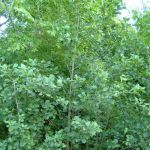
| Common Name: |
European Alder |
| Other Names: |
Common alder, black alder |
| Botanical Name: |
Alnus glutinosa |
| Genus: |
Alnus |
| Family: |
Betulaceae |
| Cultivation: |
Rich, moist to wet soil in sun or partial shade. |
| Propagation: |
By seed sown in autumn or spring; by suckers detached in autumn; by hardwood cuttings in early winter. Trees may be coppiced to minimize damage from harvesting of bark. |
| Harvest: |
Bark of young twigs and two-to three-year-old branches is peeled off lengthwise when fresh, and dried for decoctions and powders. Leaves area picked in summer and used fresh. |
| Native Region: |
Europe and Asia |
| Height: |
25m (80ft) |
| Width: |
10m (30ft) |
| Varieties: |
Aurea
Has yellow young leaves.
Imperialis
Is a graceful tree with deeply cut leaves.
Pyramidalis
Has upright branches
Height: 15m (50ft)
Width: 5m (15ft) |
| Hardiness: |
Z3-9 |
| Parts Used: |
Bark, leaves |
| Properties: |
An astringent, tonic herb that encourages healing of damaged tissue. |
| Medicinal Uses: |
Internally and externally to control bleeding, and for rheumatism (bark). Externally for throat, mouth and dental infections, wounds, and scabies (bark); as a poultice for inflammatory conditions such as rheumatism (leaves). |
| Bibliography: |
Encyclopedia of Herbs by Deni Brown Copyright © 1995, 2001 Dorling Kindersley Limited. pp 114-115.
|