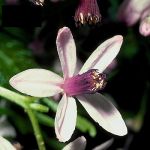
| Common Name: |
Persian Lilac |
| Other Names: |
Chinaberry, Bead Tree |
| Botanical Name: |
Melia azedarach |
| Genus: |
Melia |
| Family: |
Meliaceae |
| Location: |
N India and China |
| Cultivation: |
Well-drained to dry soil in sun. Tolerates very dry, coastal sites in warm areas. |
| Propagation: |
By seed sown at 13-18°C (55-64°F) in spring; softwood cuttings in summer. |
| Harvest: |
Leaves are collected during the growing season, bark and root bark at any time, and fruits in autumn; all parts are used fresh or dried in decoctions, ointments, and pills. |
| Height: |
12-15m (40-50ft) |
| :Width |
12m (40ft) |
<
| Variations: |
Umbraculifera
Is a multistemmed, umbrella-like tree, less hardy than the species. It comes true from seed and is weedy in some areas.
Width: 12m (40ft) |
| Hardiness: |
Z7-10 |
| Parts Used: |
Leaves, bark, root bark, fruits. |
| Properties: |
A bitter, irritant herb that has anti-parasitic and anti-fungal effects. |
| Medicinal Uses: |
Internally for intestinal worms and candidiasis. Usually combined with Glycyrrhiza glaba (See, Licorice to reduce toxicity for internal use. Externally for vaginal infections and skin diseases. |
| Warning: |
Excess causes diarrhea, vomiting, and symptoms of narcotic poisoning.
For use by qualified practitioners only. |
| Bibliography: |
Encylopedia of Herbs by Deni Brown Copyright ©: 1995, 2001 Dorling Kindersley Limited pg 274.
|