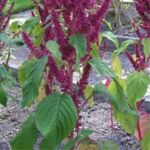
| Common Name: |
Prince's Feather |
| Other Names: |
Mercado grain amaranth |
| Botanical Name: |
Amaranthus hypochondriacus syn. A. hybridus subsp. hyprochondriacus |
| Genus: |
Amaranthus |
| Family: |
Amaranthaceae |
| Native Location: |
S USA, Mexico, India and China |
| Cultivation: |
Rich, well-drained soil in sun. Ample water and humidity intensifies foliage color. Plants grown under cover may be attacked by aphids. |
| Propagation: |
By seed sown in spring at 20°C (68°F) |
| Harvest: |
Whole plants are cut when coming into flower, and dried for infusions and liquid extracts. Leaves are picked as required and eaten fresh. Seeds are harvested when ripe. |
| Variations: |
Green Thumb
Has divided clusters of yellow-green flowers.
Height: 60cm (24in)
Width: 30cm (12in)
Pygmy Torch
Has erect clusters of maroon flowers
Height: 30-40cm (12-18in)
Width: 30cm (12in) |
| Height: |
1.2-1.5m (4-5ft) |
| Width: |
45-60cm (18-24in) |
| Hardiness: |
Half hardy |
| Parts Used: |
Whole plant, leaves, seeds. |
| Properties: |
An astringent, soothing, cooling herb that controls bleeding. |
| Medicinal Uses: |
Internally for diarrhea and excessive menstruation. Externally for ulcerated mouth and throat, vaginal discharge, wounds, and nosebleeds |
| Culinary Uses: |
Leaves are eaten as a vegetable. Seeds are harvested as a grain crop. |
| Economic Uses: |
The red pigment is used as coloring in foods and medicines. |
| Bibliography: |
Encyclopedia of Herbs by Deni Brown Copyright © 1995, 2001 Dorling Kindersley Limited Pg 117 |