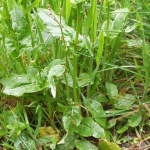
| Common Name: |
Sorrel |
| Other Names: |
Acedera Comun, Garden Sorrel, Sorrel Dock, Sour Dock |
| Botanical Name: |
Rumex acetosa |
| Genus: |
Rumex |
| Family: |
Polygonaceae |
| Location: |
Northern temperate and arctic regions. |
| Cultivation: |
Moist soil in sun or partial shade. Rumex crispus has deep roots and may be difficult to eradicate when established. It is subject to statuatory control as a weed in some countries, notably in parts of Australia. |
| Propagation: |
By seed sown in spring (species only); by division in autumn or spring. |
| Harvest: |
Leaves are picked when young and used fresh. Roots are lifted in autumn and dried for use in decoctions, liquid extracts, and tinctures. |
| Height: |
50cm-1.2m (20-48in) |
| Width: |
25-45cm (10-18in) |
| Variations: |
Profusion
Is a non-flowering variety that produces tender new leaves throughout the growing season. |
|
| Hardiness: |
Z4-8 |
| Parts Used: |
Leaves, Whole Herbs |
| Properties: |
An acidic, astringent, cooling herb with diuretic effects. |
| Medicinal Uses: |
To treat inflammation of the nasal passages and respiratory tract, scurvy, and skin infections. |
| Typical Dose: |
A typical dose of sorrel is approximately 50 drops of liquid extract (1:4 in 19 percent ethanol) taken three times daily. |
| Possible Side Effects: |
Sorrel's side effects include diarrhea and skin inflammation. The oxalic acid in sorrel can damage the digestive tract, heart, lungs, and other parts of the body. |
| Drug Interactions: |
| Taking sorrel with these drugs may increase the effects of the drug: |
| Acetazolamide, (Apo-Acetazolamide, Diamox Sequels) |
Amiloride, (Midamor) |
Azosemide, (Diat) |
Bumetanide, (Bumex, Burinex) |
| Chlorothiazide, (Diuril) |
Chlorthalidone, (Apo-Chlorthalidone, Thalitone) |
Ethacrynic Acid, (Edecrin) |
Etozolin, (Elkapin) |
| Furosemide, (Apo-Furosemide, Lasix) |
Hydrochlorothiazide, (Apo-Hydro, Microzide) |
Hydrochlorothiazide and Triamterene, (Dyazide, Maxzide) |
Hydroflumethiazide, (Diurcardin, Saluron) |
| Indapamide, (Lozol, NuIndapamide) |
Mannitol, (Osmitrol, Resectisol) |
Mefruside, (Baycaron) |
Methazolamide, (Apo-Methazolamide, Neptazane) |
| Methyclothiazide, (Aquatensen, Enduron) |
Metolazone, (Mykrox, Zaroxolyn) |
Olmesartan and Hydrochlorothiazide, (Benicar HCT) |
Polythiazide, (Renese) |
| Spironolactone, (Aldactone, Novo-Spiroton) |
Torsemide, (Demadex) |
Triamterene, (Dyrenium) |
Trichlormethiazide, (Metatensin, Naqua) |
| Urea, (Amino-Cerv, UltraMide) |
Xipamide, (Diurexan, Lumitens) |
|
| Disease Effects: |
May worsen gastrointestinal ailments by irritating gastrointestinal tract. |
| Food Interactions: |
May decrease mineral absorption from food when taken with Calcium, Iron, or Zinc. |
| Supplement Interactions: |
- May decrease mineral absorption when taken with Calcium, Iron, or Zinc supplements.
- The tannins in sorrel may cause the alkaloids in certain other herbs to separate and settle, increasing the risk of toxic reactions.
|
| Culinary Uses: |
Fresh young leaves are added to salads, sauces, soups, soft cheese, and egg dishes; also puréed as a stuffing for fish, or to add color and acidity to mayonnaise and pancake batter. |
| Economic Uses: |
Juice is used to remove rust, mold, and ink stains from linen, wood, silver, and wicker. |
| Bibliography: |
Encylopedia of Herbs by Deni Brown Copyright ©: 1995, 2001 Dorling Kindersley Limited pg.351
The Essential Herb-Drug-Vitamin Interaction Guide by Geo. T. Grossberg,MD and Barry Fox,PhD Copyright©2007 Barry Fox,PhD. Pp. 425-426 |