Hawthorn


Hawthorn

A genus of about 280 deciduous, often thorny, shrubs and trees, which occur throughout northern temperate regions. Crataegus laevigata and C. monogyna are very similar, the latter differing mainly in having more deeply lobed leaves, and fruits with one stony seed, rather than two. The former tends to grow farther north in Europe, while C. monogyna occurs throughout Europe as far as Afghanistan. Hybrids between C. laevigata and C. monogyna, known as C. x media are common in the wild. Many species of Crataegus are very variable, which in the past has led to the naming of over 1,000 different species, some of which are probably of hybrid origin. Taxonomic research has reduced this number considerably, but the numerous forms and hybrids continue to pose problems of identification. The common names of C. laevigata refer to different aspects of the plant; "may" from its time of flowering; "quickset" from its use as a "quick" or "living" hedge; and "bread-and-cheese" from the tasty young leaves, which were traditionally added to sandwiches in country areas. Many practices are associated with the hawthorn, notably the custom of going "a-Maying", and choosing a May queen, which predates Christian times. In pagan times the king and queen of the May were killed at the end of the growing season — hence the ambiguity today of hawthorn being both a symbol of hope and an omen of death. As a medicinal herb, hawthorn was traditionally used to treat kidney and bladder problems. Its use as a heart remedy began during the end of the 19th century. Crataegus laevigata, C. monogyna, and their hybrids are now used interchangeably for medicinal purposes. Unlike most medicinal plants that act on the heart, hawthorn is relatively non-toxic, although its use for such serious conditions should be confined to qualified practitioners. Crataegus pinnatifida was first mentioned as an herb in the Supplement to the Extension of the Materia Medica by Zhu Zhen Heng (c.1347). Fruits of another Chinese species, C, cuneata, have a sour but pleasant taste and are used mainly to control diarrhea.

English Hawthorn, a spring-flowering shrub often ground as an impenetrable hedge, is traditionally used to decorate maypoles for May Day celebrations. Numerous human studies have shown that English hawthorn is helpful in treating the symptoms of mild chronic heart failure and may be helpful in treating hypertension when combined with standard medicines such as ACE inhibitors and calcium channel blockers.

Hawthorn, known in Latin as Crataegus monogyna, grows in sunny, warm places. In spring, this shrub's white blossoms decorate the edges of woodlands, and in fall its brilliant red berries are visible from some distance. Hawthorn flowers, leaves and berries have long been used to prepare medicinal teas and tinctures, and in recent years hawthorn has become popular with natural healers for treating heart ailments. Traditional doctors, too, are studying hawthorn's health benefits—it has the ability to strengthen the heart muscle, promote blood flow and lower blood pressure. In fact, hawthorn may be a source of new heart drugs. It is also good for irregular heartbeats and palpitations and may help prevent heart disease in older people. Its curative effects develop over many months. Therefore, the tea should be taken daily over a long period. Even with prolonged use, no side effects have been reported.

Hawthorn's medicinal effects come primarily from the pigments knwon as flavonoids and from the glycoside oxyacanthine. Hawthorn is often combined iwth other herbs to dilate blood vessels, thereby stimulating blood flow to the heart and lowering blood pressure. The herb also increase calcium concentration in the heart muscle, which has a strengthening effect. In addition, hawthorn calms the nervous system and has antispasmodic capabilities.

The heart is placed under a great deal of stress by many infectious diseases, such as influenza or strep throat. Therefore, it's a good idea to drink hawthorn tea during such an illness and for several weeks after thereafter. The tea helps the heart recover more quickly and protects it against damage from pathogens.

Hawthorn may help to counteract a number of age-related changes in the heart, including angina and heart-rhythm disorders. Taken regularly, hawthorn improves blood circulation in the coronary vessels, strengthening the heart and helping to restore a regular heartbeat.

Hawthorn (Crataegus oxyacantha) is a spiny tree or shrub that is native to Europe. It may reach a height of 30 feet, but is often grown as a hedge plant. Its common name, hawthorn, is actually a corruption of "hedgethorn", as it was used in Germany to divide plots of land. Its botanical name, Crataegus oxyacantha, is from the Greek kratos, meaning hardness (of the wood), oxus meaning sharp, and akantha meaning a thorn. The fruit and blossoms are used medicinally.
Other species of Crataegus, for example, C. monogyna and C. pentagyna, have pharmacological actions similar to that of C. oxyacantha and are suitable alternatives.

Hawthorn tea may help relieve palpitations, chest pains, or other heart problems that can arise during menopause.

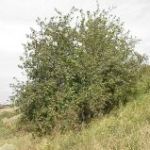
Deciduous, densely branched, spiny shrub or small tree, with shallowly lobed, obovate leaves, to 5cm (2in) long. Scented white flowers, 1cm (3/8in) across, are produced in clusters in late spring, followed by dark red, egg-shaped fruits, to 1.5cm (½in) long.


Common Name:
Hawthorn
Other Names:
English Hawthorn, Haw, May, May Bush, Mayflower, Quickset, Whitehorn
Botanical Name:
Crataegus laevigata syn. C, oxyacantha.
Genus:
Crataegus
Family:
Rosaceae
Native Location:
Europe, especially the North
Cultivation:
Moist soil, including alkaline, in sun or partial shade. Crataegus laevigata flowers and fruits better in open, sunny positions. Trim to shape at any time from late summer to early spring, or in winter for shrubs in which autumn color is a feature. Leaves may be attacked by caterpillars or affected by leafspot, powdery mildew, or rust. Honey fungus may cause rapid death. Crataegus laevigata, C. monogyna and their hybrids are subject to plant controls in parts of Australia.
Propagation:
By seed separated from ripe berries in autumn and sown in a seedbed or cold frame. Germination may take 18 months. Cultivars do not come true from seed, and are propagated by grafting in winter or budding in midsummer on to stocks of C. monogyna.
Harvest:
Flowering sprigs (with leaves) are collected in spring and dried for infusions, decoctions, tinctures, and tablets. Fruits are collected when ripe and used raw or cooked, or dried whole for use in tinctures.
Variations:
Crimson Cloud
Has large, deep pink flowers with white centers.

Paul's Scarlet syn. Coccinea Plena
Has double, deep pink flowers.
It arose as a sport of C. laevigata 'Rosea Flore Pleno' (which has paler pink double flowers) in a garden in Hertfordshire, England in 1858.

Plena
Has double, white flowers. It has been grown in gardens since c.1770.
Height:
5-8m (15-25ft)
Width:
5-8m (15-25ft)
Hardiness:
Z4-7
Parts Used:
Flower clusters (with leaves), Leaf, fruits.
Properties:
An aromatic, sweet and sour, warming herb that improves peripheral circulation and regulates heart rate, blood pressure, and coronary blood flow. It is also diuretic and antioxidant.
Chemical Composition:
Hawthorn leaves, berries, and blossoms contain many biologically active flavonoid compounds, particularly anthocyanidins and proanthocyanidins. These flavonoids are responsible for the red-to-blue colors not only of hawthorn berries, but also of blackberries, cherries, blueberries, grapes, and many flowers as well. These compounds are highly concentrated in hawthorn berry and flower extracts.
High-performance liquid chromatography and thin-layer chromatography had demonstrated that extracts of the flowers are particularly rich in flavonoids (quercetin, quercetin-3-galactoside, vitexin, vitexin-4'-rhamnoside, etc.) and proanthocyanidins.
In addition to flavonoids, hawthorn extracts also contain cardiotonic amines (e.g., phenylethylamine, o-methoxyphenylethylamine, tyramine, and isobutylamine), choline and acetylcholine, purine derivatives (e.g., adenosine, adenine, guanine, and caffeic acid), amygdalin, pectins, and triterpene acids (ursolic, oleanolic, and crataegolic acids).
Key Uses:
  • Angina
  • Atherosclerosis
  • Congestive Heart Failure
  • High Blood Pressure
Pharmacology:
The pharmacology of hawthorn centers on its flavonoid components. The proanthocyanidins in hawthorn are largely responsible for its cardiovascular activities.
Synergism With Vitamin C
Hawthorn flavonoids have very strong "vitamin P" activity. Included in their effects are an ability to increase intracellular vitamin C levels, stabilize vitamin C (by protecting it from destruction or oxidation), and decrease capillary permeability and fragility.
Collagen-Stabilizing Action
Hawthorn's flavonoid components possess significant collagen-stabilizing action. Collagen is the most abundant protein in the body and is responsible for maintaining the integrity of ground substance, tendons, ligaments, and cartilage. Collagen is destroyed during inflammatory processes that occur in rheumatoid arthritis, periodontal disease, and other inflammatory conditions involving bones, joints, cartilage, and other connective tissue. Anthocyanidins, proanthocyanidins, and other flavonoids are remarkable in their ability to prevent collagen destruction. The affect collagen in many ways including:
  • The unique ability to cross-link collagen fibers, resulting in reinforcement of the natural cross-linking of collagen that forms the collagen matrix of connective tissue (ground substance, cartilage, tendons, etc.)
  • The prevention of free radical damage, due to potent and free radical-scavenging action.
  • The inhibition of enyzmatic cleavage by enzymes secreted by white blood cells during inflammation.
  • The prevention of the release and synthesis of compounds that promote inflammation, such as prostaglandins, serine proteases, histamine, and leukotrienes.
Cardiovascular Effects
Hawthorn extracts are clinically effective in reducing blood pressure, angina attacks and serum cholesterol levels and in preventing the deposition of cholesterol in arterial walls. The beneficial pharmacological effects of hawthorn in the treatment of these conditions appears to be the result of the following actions:
  • Improvement of the blood supply to the heart by dilating the coronary vessels.
History and Folk Use:
Hawthorn flowers and berries have been used primarily as heart tonics and mild diuretics in organic and functional heart disorders including congestive heart failure, angina, and high blood pressure. Hawthorn's astringent qualities were also utilized to relieve the discomfort of sore throats.
Medicinal Uses:
Internally for circulatory disorders and heart disease of all kinds, often combine with Selenicereus grandiflorus (See, queen-of-the-night), Tilia spp. (See, linden), Viscum album, (See, mistletoe), or Scutellaria laterifolia (See, Virginian scullcap). Also combined with Ginkgo biloba (See ginkgo biloba) for poor memory.
To treat elevated blood pressure and certain kinds of irregular heartbeat; as a sedative; to prevent the destruction of collagen in the joints. Germany's Commission E has approved the use of English hawthorn to treat a decrease in cardiac output.
Methods of Administration:
Hawthorn Berry Tea:
The berries of the hawthorn plant also contain a number of active ingredients that have a beneficial effect on the cardiovascular system. The berries are available fresh or dried at health-food stores and herbal shops. To maximize the curative potential of the berry tea, prepare it as follow:
  1. To soften fresh or dried hawthorn berries, soak them at room temperature for at least 12 hr. in lukewarm water. Use 2 tsp. of berries per cup of water.
  2. Strain the liquid and reserve it. The liquid will retain the berries' active ingredients.
  3. Sweeten the berry liquid with honey to taste and heat to the desired temperature. Drink 2-3 cups daily

Hawthorn Tincture
It is ease to make your own heart-boosting hawthorn tincture. To prepare the tincture, you will need the following ingredients:
2/3 oz. Hawthorn Leaves
2/3 oz. Hawthorn Flowers
3 1/2 oz. 100-Proof Alcohol
Place the hawthorn leaves and flowers in a jar with the alcohol. Allow this mixture to stand for 10 days. Strain the liquid and store it in a small dropper bottle. Take 20 drops of this tincture each morning and evening.
Typical Dose:
A typical daily dose of English hawthorn is approximately 5 mg of the herb, taken in divided doses three times daily.
Uses and Blends:
Preparation of the Tea:
Pour 1 cup of boiling water over 1 tsp. of hawthorn flowers or leaves—or a mixture of the two. Steep the tea for 10 min.;strain. Drink 1 cup of the tea every morning and evening over many months (the onset of its action is very gradual). The berries can also be used to make the tea. However to be as effective as the flowers or leaves, the berries must soak for about 12 hours.
For High Blood Pressure and Angina:
3/4 oz. Hawthorn Flowers
3/4 oz. Valerian Root
3/4 oz. Lemon Balm Leaves
Use 1 tsp. of the herb mixture per cup of boiling water. Allow the tea to steep for 10 min., and then strain. This tea mixture lowers blood pressure and also has a calming effect on the nerves.
For a Weak Heart:
3/4 oz. Hawthorn flowers
3/4 oz. Hawthorn Leaves
3/4 oz. Goldenrod
Use 1-2 tsp. of the herb mixture per cup of boiling water. Steep the herbs for 10 min.;strain. This tea strengthens the heart and it helps it pump efficiently. It also has a diuretic effect that helps to counter fluid retention (edema).
For Irregular Heartbeat:
3/4 oz. Hawthorn Flowers
3/4 oz. Hawthorn Leaves
3/4 oz. Valerian Root
Use 1-2 tsp. of herb mixture per cup of boiling water. Steep for 10 min., and then strain. This tea regulates racing heartbeats and palpitations, particularly in people with heart-rhythm disorders. It also helps to relieve nervousness.
Possible Side Effects:
English hawthorn's side effects include palpitations, dizziness, headache, and flatulence.
Warning:
Do not use hawthorn if your doctor has prescribed digoxin or lanoxin.
Drug Interactions:
Taking English hawthorn with these drugs may enhance the drug's therapeutic and adverse effects:
Amiodarone, (Cordarone, Pacerone)
Amlopidine, (Norvasc)
Bepridil, (Vascor)
Bretylium, (Bretylium)
Digitalis, (Digitek, Lanoxin)
Diltiazem, (Cardizem, Tiazac)
Dofetilide, (Tikosyn)
Felodipine, (Plendil, Renedil)
Ibutilide, (Corvert)
Isosorbide Dinitrate, (Apo-ISDN, Isordil)
Isosorbide Mononitrate, (Imdur, Ismo)
Isradipine, (DynaCirc)
Lacidipine, (Aponil, Caldine)
Lercanidipine, (Cardiovasc, Carmen)
Manidipine, (Calslot, Iperten)
Nicardipine, (Cardene)
Nifedipine, (Adalat CC, Procardia)
Nilvadipine, (Nilvadipine)
Nimodipine, (Nimotop)
Nisoldipine, (Sular)
Nitrendipine, (Nitrendipine)
Nitroglycerin, (Nitro-Bid, Nitro-Dur)
Pinaverium, (Dicetel)
Sotalol, (Betapace, Sorine)
Verapamil, (Calan, Isoptin SR)
Taking English hawthorn with these drugs may increase the risk of bleeding and bruising:
Abciximab, (ReoPro)
Aspirin, (Bufferin, Ecotrin)
Aspirin and Dipyridamole, (Aggrenox)
Clopidogrel, (Plavix)
Dipyridamole, (Novo-Dipiradol, Persantine)
Eptifibatide, (Integrillin)
Indobufen, (Ibustrin)
Ticlopidine, (Alti-Ticlopidine, Ticlid)
Tirofiban, (Aggrastat)
Taking English hawthorn with these drugs may decrease drug absorption:
Ferrous Sulfate, (Feratab, Fer-Iron)
Iron-Dextran Complex, (Dexferrum, INFeD)
Taking English hawthorn with this drug may be harmful:
Digitalis, (Digitek, Lanoxin)—may increase the risk of drug toxicity.
Supplement Interactions:
  • Increased risk of cardiotoxicity due to potassium depletion when taken with cardioactive herbs, such as Digitalis, Lily of the Valley, and Squill.
  • Increases the action of Adonis when taken concurrently.
  • Increases the action of Lily of the Valley when taken concurrently.
  • Increases the action of Squill when taken concurrently.
Bibliography:
Encyclopedia of Herbs by Deni BrownCopyright © 1995, 2001 Dorling Kindersley Limited. pg. 182
The Essential Herb-Drug-Vitamin Interaction Guide by Geo. T. Grossberg,MD and Barry Fox,PhD. Copyright©2007 Barry Fox,PhD. Pp.196-197
The Complete Guide to Natural Healing Copyright©1999 International Masters Publisher,AB Group 2 Card 28 Therapeutic Teas.