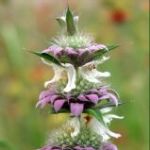
| Common Name: |
Horsemint |
| Other Names: |
Wild Bergamot |
| Botanical Name: |
Monarda fistulosa |
| Genus: |
Monarda |
| Family: |
Lamiaceae |
| Native Location: |
Eastern N America |
| Cultivation: |
Rich, moist soil in sun (Monarda didyma); sandy or rocky soil in sun (M. citriodora); light, dry, alkaline soil in sun (M. fistulosa and M. punctata). M. didyma is prone to mildew in dry conditions. |
| Propagation: |
By seed sown in spring or autumn; by division in spring; by softwood cuttings in early summer. |
| Harvest: |
Plants are cut when flowering, and leaves before flowering, and used fresh or dried for infusions. |
| Height: |
1.2m (48in) |
| Width: |
45cm (18in) |
| Hardiness: |
Z3-9 |
| Variations: |
var. menthaefolia syn. M. menthaefolia
(Oregano de la sierra, mountain oregano, mint-leafed oregano)
Has a sweet oregano-like fragrance and lavender flowers. |
|
| Parts Used: |
Whole Plant, Leaves |
| Properties: |
An aromatic, stimulant herb that improves the digestion and increases perspiration. |
| Medicinal Uses: |
Internally for colds, sore throat, mucus, headaches, fevers, and gastric disorders. Externally for skin eruptions. Contraindicated during pregnancy. |
| Culinary Uses: |
Leaves are used to flavor meat and beans; young shoots aand leaves are infused for tea. |
| Bibliography: |
The Encyclopedia of Herbs by Deni Bown Copyright © 1995, 2001 Dorling Kindersley Limited pp.280-281 |