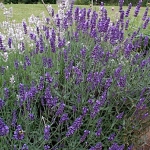
| Common Name: |
Lavender |
| Other Names: |
Aspic, Common Lavender, English Lavender, French Lavender, Lavanda, Spanish Lavender |
| Botanical Name: |
Lavendula angustifolia syn. L. offinalis, L. spicain spart, L. vera in part |
| Genus: |
Lavendula |
| Family: |
Labiatae |
| Native Location: |
Mediterranean, England, France, United States. |
| Cultivation: |
Well-drained, neutral to alkaline soil in an open, sunny position. Lavandula stoechas thrives in acid soil; L. latifolia tolerates slight acidity. Trim hedges and cut specimen plants back in spring to encourage bushiness. Dead-head and trim lightly after flowering. Lavendula lanata is very sensitive to overwatering and damp conditions. Lavenders are affected by gray mold, scab, leaf spot, and honey fungus. Plants become woody with age and are best replaced every 3-4 years. Lavandula stoechas is subject to statutory control as a weed in parts of Australia. |
| Propagation: |
By seed sown on surface of soil mix in spring; by semi-ripe cuttings in summer. Seeds of L. angustifolia germinate more quickly if placed in the freezer for two hours before sowing. Cultivars do not come true from seed. |
| Harvest: |
Flowers of L. angustifolia and L. x intermedia are picked as they begin to open and used fresh, distilled for oil, or (L. angustifolia only) dried for use in infusions, spirits, and tinctures. Flower heads and flowers of other lavenders are gathered as they open, for drying. |
| Height: |
60-70cm (24-28in) |
| Width: |
60-70cm (24-28in) |
| Hardiness: |
Z5-8 |
| Variations: |
Blue Cushion
Syn. Schola
Is small and bushy, with mid-green leaves, and violet-blue flowers in spikes 4-7cm (1½-3in) long, borne on stems 15-17cm (6-7in) long; ideal for pots and low hedges.
Height: 50cm (20in) |
Bowles' Early
Is upright and bushy, with dense, mid-green leaves, and violet-blue flowers in cylindrical spikes, 2-3cm (¾-1¼in) long, borne on stems 14-18cm (5½-7in) long
Height: 60cm (24in)
Width: 60cm (24in) |
Buena Vista
Is a bushy, medium-sized plant with green foliage and deep blue-purple flowers in evenly interupted spikes, 7-12cm (3-5in) long. Blooms into autumn; excellent for landscaping. |
Cedar Blue
Is small, with dense gray-green foliage and violet-blue flowers in short spikes, to 3cm (1¼in) long, born on stems 10-17cm (4-7in) long; good for containers and edging |
Folgate
Is broad but compact in habit, with mid-green leaves, and quite strongly scented violet-blue flowers, borne on stems 17-22cm (7-9in) long. |
Grey Lady
Is vigorous, with large gray leaves.
Width: 1.2m (4ft) |
Hidcote
Is bushy, with dense, gray-green foliage, and strongly scented, violet flowers in cylindrical, slightly interrupted spikes, 3-7cm (1¼-3in) long, on stems 12-22cm (4¾-9in) long.
Height: 60-70cm (24-28in)
Width: 75cm (30in) |
Hidcote Pink
Is bushy to spherical, with mauve-pink flowers on spikes 6-8cm (2½-3in) long, borne on stems 15-19cm (6-7in) long.
Height: 70cm (28in) |
Imperial Gem
Is bushy, with dense, gray-green leaves, and deep violet, highly fragrant flowers, in cylindrical, mostly interrupted spikes, 4-6cm (1½-2½in) long; good for hedging
Height: 70cm (28in)
Width: 70cm (28in) |
Jean Davis
Is upright, with dense, gray-green foliage, and mauve-pink flowers in spikes 5-7cm (2-3in) long, borne on stems 12-25cm (5-10in) long. |
Lady
Syn: Atlee Burpee, Lavender Lady
Is compact, with mid-green foliage and violet-blue flowers in globose to cylindrical spikes, 1-3cm (3/8-1¼in) long, borne on stems 6-13cm (2½-5in)long. Usually grown from seed, therefore variable; often grown as an annual in cold areas. Needs hard pruning to prevent tendency to split open.
Height:40-50cm (16-20in)
Width: 40-50cm (16-20in) |
Loddon Blue
Is rounded, with dense, gray-green foliage and violet-blue flowers in spikes 4-7cm (1½-2¾in) long, borne on stems 14-18cm (5½-7in) long.
Height: 60cm (24in)
Width: 60cm (24in) |
Loddon Pink
Is upright and bushy, with mid-green foliage, and pink to mauve-pink flowers in spikes 6-10cm (2½-4in) long, borne on stems 19-28cm (7-11in) long
Height: 50-60cm (20-24in)
Width: 50-60cm (20-24in) |
Miss Katherine
Is relatively large and bushy, with dense, gray-green foliage, and lilac-pink very fragrant flowers in spikes 7-11cm (3-4¼in) long; excellent as a hedge or feature
Height: 75cm (30in)
Width: 75cm (30in) |
Munstead
Is compact, with dense, small, mid-green leaves and lavender-blue flowers in interrupted spikes 6-13cm (2½-5in) long, on stems 14-23cm (5½-9in) long. Usually grown from seed, therefore variable.
Height: 45cm (18in)
Width: 60cm (24in) |
Nana Alba
Is dwarf, compact, with silver-gray leaves and white flowers in spikes 4-5cm (1½-2in) long; the smallest white-flowered cultivar, ideal for pots or edging.
Height: 30cm (12in)
Width: 30cm (12in) |
Okamurasaki
Is bushy, with rather open, mid-green foliage, and very large, violet-blue, pale-throated flowers in cylindrical, interrupted spikes, 5-9cm (2-3½in) long, borne on stems 14-20cm (5½-8in) long.
Height: 70cm (28in) |
Princess Blue
Is upright and bushy, with large, violet-blue flowers in spikes 6-10cm (2½-4in) long, borne on stems 12-22cm (5-9in) long.
Height: 70cm (28in) |
Rosea
Is upright and bushy, with light green leaves and mauve-pink flowers in spikes 5-9cm (2-3½in) long, borne on stems 16-23cm (6-9in) long; the oldest pink lavender, introduced before 1937 |
Royal Purple
Is a large cultivar that is good for hedging, with narrow, gray-green leaves, and long spikes of deep purple flowers, which retain their color well after drying.
Height: 80cm (32in)
Width: 80cm (32in) |
Royal Velvet
Is small to medium and bushy, with gray-green foliage and vivid purple flowers in spikes 7-9cm (3-3½in), borne on stems 30-35cm (12-14in) long. |
Sharon Roberts
Is bushy, with mid-gray to gray-green foliage, and deep lavender-blue, very fragrant flowers in spikes 6-10cm (2½-4in) long, borne on stout, dark-edged stems, 18-23cm (7-9in) long. Consistently blooms twice in early summer and again in autumn. |
Tucker's Early Purple
Is small and bushy, with rather open, gray-green foliage; violet-blue flowers in cylindrical interrupted spikes, 4-6cm (1¼-2½in) long, borne on stems 8-22cm (3-9in) long. Early and long blooming. |
Twickel Purple
Is tall and spherical, with open, mid-green to gray-green foliage, and violet-blue flowers in cylindrical interrupted spikes, 8-19cm (3-7in) long, borne on strong stems, 26-34cm (10-14in) long; ideal for craft work. Needs pruning regularly to prevent excessive sprawling. |
|
| Direction: |
East |
| Magical Purpose: |
Anointing the wand, the robe, Midsummer, offering to the God |
| Deities: |
Mercury, Lugh, Herne, Hermes, Aescelpius, Eros |
| Planet: |
Mercury |
| Element: |
Air |
| Magical Effects: |
Health, Love, Celibacy, Peace, Conscious Mind |
| Extraction: |
Steam Distillation |
| Parts Used: |
Flowers, oil of flower |
| Color and Odor: |
The essential oil is clear with a hint of yellow. It has a fresh, sweet floral scent. |
| Background: |
Probably introduced by the Romans to England, lavender quickly became popular for strewing, in potpouris, and is also widely used in toilet water. Lavender isn the most versatile and useful essential oil for therapeutic purposes. |
| History: |
One of the most treasured of the aromatic healing herbs, prized for its ornamental, cosmetic, and medicinal uses, lavender was the favored bath oil among ancient Romans and Greeks. Indeed, it received its name from the Latin lavare, meaning "to wash".
European folk herbalists believed that lavender acted as an anaphrodisiac, that is, it quelled sexual passion, and they recommended the crushed flowers be sprinkled on one's head to maintain purity. Early American colonists, among them may English Puritans, made a paste of fresh lavender flowers combined with vinegar and spread it on their foreheads to relieve persistent headaches. And the seventeenth-century herbalist Nicholas Culpeper recommended a tea made of lavender, horehound, fennel, asparagus, and cinnamon to treat "giddiness or turning of the brain". |
| Properties: |
Sedative, tonic, hypotensive, analgesic, antiseptic, antispasmodic, diuretic, cytophylactic, balancing.
An aromatic, tonic herb with a sweet scent. It relaxes spasms, benefits the digestion, stimulates peripheral circulation and uterus, and lowers fevers. It has anti-depressant effects and is antiseptic. |
| Magical Influences: |
Creativity, Peace, Calming, Protection, Study, Knowledge, Sleep, Faery Magick, Inspiration |
| Uses: |
- Urinary Sytem—Beneficial for cystitis.
- Circulatory System—Valuable in the treatment of palpitations and high blood pressure.
- Respiratory Sytem—Beneficial for treating throat infections, influenza, bronchitis and whooping cough. Helps asthma sufferers when their condition is associated with mental or emotional trauma.
- Reproductive System—Useful for treating scanty menstruation and leucorrhoea.
- Nervous System—Calms a variety of nervous disorders including excitability, insomnia, migraine and nervous tension. Lavender is also good for other nervous problems such as panic, hysteria, trembling, convulsion and epilepsy. Particularly good for depression and delusions.
- Muscular System—Good for muscular and rheumatic aches and pains.
- Skeletal System—Beneficial for general joint pains.
- Skin—An excellent rejuvenator, good for stretch-marks. It is antiseptic and may be used with benefit on all skin types. Useful for inflammation, dermatitis, eczema, psoriasis, boils, scarring, and burns. Lavender is also a very effective remedy for sunburn, insect bites, and stings.
- Emotions—A steadying influence on the psyche, removing indecisiveness and emotional conflict. Lavender's balancing effect calms stormy or uncontrolled emotional states by bringing the feelings under conscious control. Tempers extreme emotional states with a sense of rationality. Generally strengthens the concious mind, emanating a noble, mellow peacefulness. Good for depression.
|
| Medicinal Uses: |
Internally for indigestion, depression, anxiety, exhaustion, irritability, tension headaches, migraine, and bronchial complaints (including tuberculosis). Externally for burns, sunburn, rheumatism, muscular pain, neuralgia, skin complaints, cold sores, insect and snake bites, head lice, halitosis, vaginal discharge, and anal fissure. Combines well with Rosmarinus officinalis (See Rosemary) for depression and tension headaches, with Verbena officinalis (See Verbena) for migraine and nervous tension, and with Filipenula ulmaria (See Meadowsweet) and Actaea racemosa (See Black Cohosh) for rheumatism. Added to baths for patients suffering from debility, nervous tension, and insomnia.
To treat loss of appetite, insomnia, migraines, asthma, and rheumatic ailments. Germany's Commission E has approved the use of English Lavender to treat insomnia, nervousness, loss of appetite, stomach complaints, and circulatory problems.
Today lavender flowers are used internally—in teas and decoctions—for headache, depression, stress, insomnia, indigestion, gas, nausea, and colic. Strongly antiseptic and antibacterial, lavender oil is applied externally to treat burns, infections, eczema, acne, fungi, and ringworm. The oil also has pain-relieving and sedating qualities and is spread on the skin or inhaled to relieve head and sinus pain. An essential ingredient in many aromatherapy treatments, lavender is inhaled to increase mental acuity, stimulate creativity, and relieve depression. (For depression, lavender is often combined in teas with kola nut, rosemary, or skullcap (Scutellaria lateriflora). |
| Preparation: |
Lavender is available as dried herb and in teas, tinctures, and oils. To make a tea, pour 1 cup of boiling water over 1 teaspoon of dried herb and steep for 10 minutes. Strain, and drink up to 3 cups a day. |
| Typical Dose: |
A typical dose of English lavender may be up to 2 ml of tincture taken three times a day, or 1 to 2 tsp of dried flowers steeped in 1 cup of boiling water for 10 to 15 minutes and taken as a tea. |
| Possible Side Effects: |
Lavender's more common side effects (when taken internally) include constipation, headache, and increased appetite. |
| Drug Interactions: |
| Taking English Lavender internally with these drugs may increase sedation: |
| Acetaminophen and Codeine, (Capital and Codeine, Tylenol with Codeine) |
Acetaminophen, Chlorpheniramine, and Pseudoephedrine, (Children's Tylenol Plus Cold, Sinutab Sinus Allergy Maximum Strength.) |
Acetaminophen, Dextromethorphan, and Pseudoephedrine, (Alka-Seltzer Plus Flu Liqui-Gels, Sudafed Severe Cold) |
Acrivastin and Pseudoephedrine, (Semprex-D) |
Alfentanil, (Alfenta) |
Amobarbital, (Amytal) |
| Aspirin and Codeine, (Coryphen Codeine) |
Azatadine, (Optimine) |
Azatadine and Pseudoephedrine, (Rynatan Tablet, Trinalin) |
Azelastine, (Astelin, Optivar) |
Belladonna and Opium, (B&O Supprettes) |
Brompheniramine and Pseudoephedrine, (Children's Dimetapp Elixir Cold & Allergy, Lodrane) |
| Buprenorphine, (Buprenex, Subutex) |
Buprenorphine and Naloxone, (Suboxone) |
Butabarbital, (Butisol Sodium) |
Butorphanol, (Apo-Butorphanol, Stadol) |
Carbinoxamine, (Histex CT, Histex PD) |
Carbinoxamine and Pseudoephedrine, (Rondec Drops, Sildec) |
| Carbinoxamine, Pseudoephedrine, and Dextromethorphan, (Rondec Dm Drops, Tussafed) |
Cetirizine, (Reactine, Zyrtec) |
Chloral Hydrate, (Aquachloral Supprettes, Somnote) |
Chlordiazepoxide, (Apo-Chlordiazepoxide, Librium) |
Chlorpheniramine and Acetaminophen, (Coricidin HBP Cold and Flu) |
Chlorpheniramine and Phenylephrine, (Histatab Plus, Rynatan) |
| Chlorpheniramine, Ephedrine, Phenylephrine, and Carbetapentane, (Rynatuss, Tynatuss Pediatric) |
Chlorpheniramine, Phenylephrine, and Dextromethorphan, (Alka-Seltzer Plus Cold and Cough) |
Chlorpheniramine, Phenylephrine and Methscopolamine, (AH-Chew, Extendryl) |
Chlorpheniramine, Phenylephrine, and Phenyltoloxamine, (Comhist, NalexA) |
Chlorpheniramine, Phenylephrine, Codeine, and Potassium Iodide, (Pediacof) |
Chlorpheniramine, Pseudoephedrine, and Codeine, (Dihistine DH, RynaC) |
| Chlorpheniramine, Pseuodephedrine, and Dextromethorphan, (Robitussin Pediatric Night Relief, Vicks Pediatric 44M) |
Cimetidine, (Nu-Cimet, Tagamet) |
Clemastine, (Tavist Allergy) |
Clorazepate, (Tranxene, T-Tab) |
Codeine, (Codeine Contin) |
Cyproheptadine, (Periactin) |
| Deptropine, (Deptropine FNA) |
Desloratadine, (Aerius, Clarinex) |
Dexbrompheniramine and Pseudoephedrine,(Drixomed, Drixoral Cold & Allergy) |
Dexchlorpheniramine, (Polaramine) |
Dexmedetomidine, (Precedex) |
Diazepam, (Apo-Diazepam, Valium) |
| Dihydrocodeine, Aspirin, and Caffeine, (Synalgos-DC) |
Dimethindene, (Fenestil) |
Diphenhydramine, (Benadryl Allergy, Nytol) |
Diphenhydramine and Pseudoephedrine, (Benedryl Allergy/Decongestant, Benadryl Children's Allergy and Sinus) |
Doxylamine and Pyridoxine, (Diclectin) |
Epinastine, (Elestat) |
| Estazolam, (ProSom) |
Famotidine, (Apo-Famotidine, Pepcid) |
Fentanyl, (Actiq, Duragesic) |
Fexofenadine, (Allegra) |
Fexofenadine nd Pseudoephedrine, (Allegra D) |
Flurazepam, (Apo-Flurazepam, Dalmane) |
| Haloperidol, (Haldol, Novo-Peridol) |
Hydrocodone and Acetaminophen, (Vicodin, Zydone) |
Hydrocodone and Aspirin, (Damason-P) |
Hydrocodone and Chlorpheniramine, (Tussionex) |
Hydrocodone and Ibuprofen, (Vicoprofen) |
Hydrocodone, Carbinoxamine, and Pseudoephedrine, (Histex HC, TriVent HC) |
| Hydromorphone, (Dilaudid, PMS-Hydromorphone) |
Hydroxyzine, (Atarax, Vistiril) |
Ketotifen, (Novo-Ketotifen, Zaditor) |
Levocabastine, (Livostin) |
Levomethadyl Acetate Hydrochloride, (Levomethadyl Acetate Hydrochloride) |
Levorphanol, (LevoDromoran) |
| Loratadine, (Alavert, Claritin) |
Loratadine and Pseudoephedrine, (Claritin-D 12 Hour, Claritin-D 24 Hour) |
Lorazepam, (Ativan, Nu-Loraz) |
Mebhydrolin, (Bexidal, Incidal) |
Meperidine, (Demerol, Meperitab) |
Meperidine and Promethazine, (Meperidine and Promethazine) |
| Mephobarbital, (Mebaral) |
Methadone, (Dolophine, Methadose) |
Midazolam, (Apo-Midazolam, Versed) |
Mizolastine, (Elina, Mizollen) |
Morphine Sulfate, (Kadian, MS-Contin) |
Nalbuphine, (Nubain) |
| Nizatidine, (Axid, PMS-Nizatidine) |
Olopatadine, (Patanol) |
Opium Tincture, (Opium Tincture) |
Oxatomide, (Cenacert, Tinset) |
Oxycodone, (OxyContin, Roxicodone) |
Oxycodone and Acetaminophen, (Endocet, Percocet) |
| Oxycodone and Aspirin, (Endoden, Percodan) |
Oxymorphone, (Numorphan) |
Paregoric, (Paregoric) |
Pentazocine, (Talwin) |
Pentobarbital, (Nembutal) |
Phenobarbital, (Luminal Sodium, PMS-Phenobarbital) |
| Phenoperidine, (Phenoperidine) |
Promethazine, (Phenergan) |
Promethazine and Codeine, (Phenergan with Codeine) |
Promethazine and Dextromethorphan, (Promatussin DM) |
Promethazine and Phenylephrine, (Promethazine and Phenylephrine) |
Promethazine, Phenylephrine, and Codeine, (Promethazine, Phenylephrine, and Codeine) |
| Propofol, (Diprivan) |
Propoxyphene, (Darvon, Darvon-N) |
Propoxyphene and Acetaminophen, (Darvocet-N 50 Darvocet-N 100) |
Propoxyphene, Aspirin, and Caffeine, (Darvon Compound) |
Quazepam, (Doral) |
Ranitidine, (Alti-Ranitidine, Zantac) |
| Remifentanil, (Ultiva) |
Secobarbital, (Seconal) |
Sufentanil, (Sufenta) |
Temazepam, (Novo-Temazepam, Restoril) |
Thiopental, (Pentothal) |
Triazolam, (Apo-Triazo, Halcion) |
| Tripelennamine, (PBZ, PBZ-SR) |
Triprolidine and Pseudoephedrine, (Actifed Cold and Allergy, Silafed) |
Triprolidine, Pseudoephedrine, and Codeine, (CoActifed, Covan) |
Zolpidem, (Ambien) |
| Taking English Lavender (in the form of a tea) with these drugs may interfere with drug absorption: |
| Ferric Gluconate, (Ferrlecit) |
Ferrous Fumarate, (Femiron, Feostat) |
Ferrous Gluconate, (Fergon, Novo-Ferrogluc) |
| Ferrous Sulfate, (Feratab, Fer-Iron) |
Ferrous Sulfate and Ascorbic Acid, (FeroGrad 500, Vitelle Irospan) |
Iron-Dextran Complex, (Dexferrum, INFeD) |
| Polysaccharide-Iron Complex, (Hytinic, Niferex) |
|
| Lab Test Alterations: |
May decrease blood cholesterol levels. |
| Culinary Uses: |
Fresh flowers are crystallized or added to salads, jams and jellies, ice cream, and vinegar. Leaves are used in salads, marinades, and for flavoring soups and stews. Flowers and leaves are used to make herb tea. |
| Economic Uses: |
Oil is used in perfumery and toiletries. Dried flowers are used in potpourris. |
| Blends: |
| URINARY |
CIRCULATORY |
RESPIRATORY |
| Lavender 6 |
Lavender 7 |
Lavender 6 |
| Sandalwood 4 |
Ylang-Ylang 3 |
Benzoin 4 |
| Juniper 2 |
Melissa 2 |
Cedarwood 2 |
|
| REPRODUCTIVE |
NERVOUS |
MUSCULAR |
| Lavender 6 |
Lavender 7 |
Lavender 7 |
| Sandalwood 4 |
Frankincense 3 |
Coriander 3 |
| Rose 3 |
Rose 3 |
Nutmeg 3 |
|
| SKELETAL |
SKIN |
EMOTION |
| Lavender 7 |
Lavender 4 |
Lavender 6 |
| Rosemary 4 |
Chamomile (R) 2 |
Neroli 3 |
| Chamomile (G) 3 |
Sandalwood 2 |
Petitgrain 2 |
| Bibliography: |
Aromatherapy Blends and Remedies by Franzesca Watson Copyright ©: 1995 Thorsons, Harper Collins Publishers, Inc. pp.118-121
Magical Aromatherapy by Scott Cunningham Copyright © 1989 Llewellyn Publications Inc. pp. 101-103
Wicca, Guide to the Solitary Practioner by Scott Cunningham Copyright © 1988 Llewellyn Publications, Inc. pp. 159-168
The Encyclopedia of Herbs by Deni Bown Copyright © 1995, 2001 Dorling Kindersley Limited pp.252-254
The Essential Herb-Drug-Vitamin Interaction Guide by Geo. T. Grossberg,MD and Barry Fox,PhD Copyright©2007 Barry Fox,PhD. Pp.197-200
The Modern Herbal Primer by Nancy Burke Copyright©2000 Yankee Publishing Inc. pp. 117-118 |
|