Myrrh

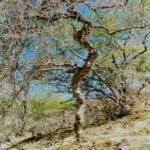
A small tree with knotted branches, small leaves and white flowers. The resin exudes from natural fissures in the the bark and dries on exposure to the air.

About 180 species of small, deciduous, mostly thorny shrubs and trees belong to this genus, occurring in E and W Africa, Arabia, India, S America, and the West Indies. This genus was not discovered in the New World until the 1980s. Commiphoras exude an oleo-gum resin known as myrrh tha varies slightly in composition from one species to another. It is obtained from several species, including C. foliacea, C. gileadensis (balm of Gilead, opalbalsamum), C. habessinica and C. wightii syn. C. mukul (guggul). The term "bdellium" can refer to these trees collectively, or to the resin. Myrrh has been a standard medicament in the Middle East since Biblical times for infected wounds, bronchial and digestive complaints, and is especially associated with women's health and purification rituals. Being a symbol of suffering, myrrh was one of the three gifts presented by the Magi to the infant Jesus as was used to embalm Christ's body after the crucifixion. According the to the Gospel of St. Mark, myrrh wine, vinum murratum, was offered by soldiers to Jesus before the crucifixion. Chinese medicinal texts first described myrrh c CE600, and it has a long history of use in Ayurvedic medicine as a rejuvenative. Scientific research has shown that myrrh contains compounds that have a powerful painkilling effect. Guggul (the resin from C. wightii) is of great importance in Ayurvedic medicine as a rejuvenative and remedy for diseases of old age, and for conditions associated with bone, joint or nerve pain. Combined with triphala (See, myrobalan) to make a restorative known as triphala guggula. Guggul has recently been found to contain unique saponins, known as guggulipid, that lower cholesterol and have anti-inflammatory effects in arthritis. It also contains phytosterols that have a hormonal effect. Populations of C. wightii are decreasing due to overcollection and destructive harvesting.

Guggul, a resin produced by the mukul mirth tree, is a traditional Indian remedy that has been used to treat skin diseases, urinary problems, joint pain, and other ailments. When further refined, it becomes guggulipid, which contains various substances that may lower cholesterol and help combat obesity.

So prized that the three wise men presented it to the infant Jesus as a gift, myrrh has been known since ancient times as the herbalist's cleanser. Traditionally it has been used to treat upper respiratory conditions, leg ulcers, and stomatitis and as a prime ingredient in gargles and mouthwashes for the treatment of mouth sores, infected gums, sore throats, coughs, and thrush.

Gugulipid is derived from the mukul myrrh tree (Comniphora mukul), a small thorny tree 4 to 6 feet tall that is native to Arabia and India. In its natural setting, the tree remains essentially free of foliage for most of the year. Its bark is ash-colored and comes off in rough flakes, exposing the underbark, which also peels off. On injury, the tree exudes a yellowish gum resin that has a balsamic odor. This oleoresin is referred to as "gum guggul" or guggulu". This resin is used for medicinal purposes. When tapped during the winter, the average tree yields 700-900 grams of resin.

Deciduous, areomatic, spiny shrub with trifoliate leaves that have obovate leaflets, the terminal leaflet 1cm (3/8in) long. Yellow-red, 4-petaled flower, with a persistant calyx, appear after the rains, often before the new leaves, followed by pointed, ellipsoid fruits to 7mm (¼in) long.


Common Name:
Myrrh
Other Names:
African Myrrh, Arabian Myrrh, Bal, Bol, Bola, Didin, Guggal, Guggul, Guggal Gum, Gugulipid, Guggal Resin, Gum Guggal, Guggulu, Mukul, Myrrh Tree
Botanical Name:
Commiphora myrrha syn. C. molmol, Comniphora mukluk.
Genus:
Commiphora
Family:
Burseraceae
Native Location:
Africa, Arabia, N Somalia, Yemen
Cultivation:
Well-drained soil in sun
Propagation:
By seed sown in spring; by hardwood cuttings at the end of the growing season.
Harvest:
Resin is collected from cut branches and dried to a solid, which is distilled for oil, ground for powder, tablets or capsules, or dissolved in tinctures.
Extraction:
Steam Distillation
Height:
5m (16ft)
Width:
1.5m (5ft)
Hardiness:
Min. 10-15°C (50-60°F)
Parts Used:
Gum Resin (mo yao), oil, extract of gum resin.
Chemical Composition:
Guggulu contains a mixture of diverse chemical constituents that can be seperated into several fractions. The first step in the fractionation process involves mixing guggulu with ethyl acetate, yielding a soluble and an insoluble fraction. The insoluble fraction, containing the carbohydrate constituents, is toxic and is the major reason why extracts of the soluble portion are preferred to crude gum guggul for medical use. The insoluble portion has no demonstrable pharmacological activity other than toxicity.
In contrast, the soluble portion possesses significant cholesterol-lowering and anti-inflammatory activity. The soluble portion can be further separated into base, acid, and neutral fractions. The neutral portion possesses almost all of the cholesterol-lowering activity, while the acid portion possesses the anti-inflammatory components.
On further purification of the neutral portion it was determined that the ketone fraction contains the most potent cholesterol-lowering components. The ketone fraction is composed of C21 or C27 steroids, with the major components being Z- and E-guggulsterone. These compounds are considered the major active components of gum guggul and its extract.
For medicinal purposes, a standardized extract known as gugulipid, which contains a minimum of 50 milligrams of guggulsterones per gram, is regarded as the most beneficial in terms of safety and effectiveness. In addition to guggulsterones, gugulipid contains various diterpenes, sterols, esters, and fatty alcohols. These accessory components appear to exert a synergistic effect.
Color and Odor:
The essential oil is deep golden-yellow, turning deep amber with age. It has a musty, balsamic, smoky aroma.
Background:
Myrrh is famous, together with frankincense and gold, as the gifts brought by the three Magi from the East to Jesus when he was born. It is mentioned several times in the Bible. Myrrh was an important ingredient in the famous perfume "megaleion" of ancient Greece.
Properties:
Antiseptic, cooling, tonic, stimulant, expectorant, vulnerary, emmenagogic, anti-inflammatory, sedative, astringent.
A pungent, astringent, aromatic herb that is strongly stimulant, antiseptic, and expectorant. It relieves spasms, inflammation, and digestive discomfort; encourages healing.
Pharmacology:
The pharmacology of gugulipid focuses primarily on its ability to lower cholesterol and triglyceride levels.
Cholesterol- and Triglyceride-Lowering Effects
Numerous studies in humans and animals have shown that gum guggul (both crude and purified alcohol extract), its petroleum ether extract (referred to as fraction A), and gugulipid (standardized ethyl acetate extract) all exert effective lipid-lowering activity. All three lower elevated cholesterol and triglyceride levels. The effect on cholesterol is particularly beneficial, as guggul lowers very low-density lipoprotein (VLDL) cholesterol and low-density lipoprotein (LDL) cholesterol while simultaneously elevating high-density lipoprotein (HDL) cholesterol, thus offering protection against heart disease due to atherosclerosis.
The primary mechanism of action for gum guggul and for gugulipid's cholesterol-lowering action is stimulation of liver metabolism of LDL cholesterol; that is, guggulsterones increase the uptake of LDL cholesterol from the blood by the liver. However, another action of guggulsterone that also affects lipid levels is its ability to stimulate thyroid function. This thyroid-stimulating effect may be responsible for some of gugulipid's weight loss activity.
Prevention and Reversal of Atherosclerosis
In addition to lowering lipid levels, gum guggul and its extracts, including gugulipid, prevent the development of atherosclerosis and aid in the regression of preexisting atheroslerotic plaques in animals. This implies that it may have a similar effect in humans.
Gum guggul and its extracts mildly inhibit platelet aggregation and promote fibrinolysis, implying that they may also prevent the development of a stroke of embolism.
Cardioprotective Activity
Gum guggul and gugulipid prevent the heart from being damaged by free radicals and improve the metabolism of the heart.
Anti-Inflammatory Effects
The guggulsterone fraction of gum guggul exhibits significant anti-inflammatory action in experimental models of inflammation (e.g., raw paw edema and adjuvant arthritis method). Its activity in models of acute inflammation is comparable to approximately one-fifth that of hydrocortisone, and equal to phenylbutazone and ibuprofen. In models of chronic inflammation, it was shown to be more effective than hydrocortisone, phenylbutazone, and ibuprofen in reducing the severity of secondary lesions. The anti-inflammatory action is thought to be due to inhibition of delayed hypersensitivity reactions.
Clinical Applications:
The primary clinical application of gugulipid is in the treatment of elevated cholesterol and triglyceride levels. Research indicates that gugulipid offers considerable benefit in preventing and treating atherosclerotic vascular disease, the leading cause of death in the United States.
Gugulipid appears most indicated in type IIb (increased LDL cholesterol, VLDL cholesterol, and triglycerides) and type IV (increased VLDL cholesterol and triglycerides) hyperlipidemias. In human clinical trials using gugulipid, cholesterol levels typically dropped 14 to 27 percent in a 4- to 12-week period, while triglyceride levels dropped from 22 to 30 percent. Table 1.1 compares the effects of gugulipid and standard drugs on serum lipids.
As seen in Table 1.1, the effect of gugulipid on serum cholesterol and triglycerides is comparable to that of other lipid-lowering drugs. However, while the drugs are associated with significant toxicity, appropriate extracts of gugulipid produce no side effects. In addition to the excellent safety demonstrated in human studies, safety studies in animals have demonstrated gugulipid to be virtually nontoxic.
Table 1.1 Serum Lipid Effects of Gugulipid Compared to Standard Drugs.

Agent
Total Cholesterol (%)
HDL Cholesterol (%)
Triglycerides (%)

Gugulipid
-24
+16
-23
Cholestyramine
-14
+8
+10
Gemfibrozil
-10
+11
-22
Lovastatin
-34
+8
-25

Key Uses:
  • High Cholesterol levels
  • High Triglyceride Levels
History and Folk Use:
Guggulu is a highly valued botanical medicine in the Indian system of medicine, Ayurveda. It is included in formulas for a variety of health conditions including rheumatoid arthritis and lipid disorders. The classic Ayurvedic medical text, the Sushrutasamhita, describes in detail the usefulness of guggul in the treatment of obesity and other disorders of fats, including "coating and obstruction of channels".
Inspired by this description, researchers began studying, in well-designed scientific studies, the clinical effectiveness of gum guggul and its extracts in disorders of lipid metabolism—specifically, its ability to lower cholesterol and triglyceride levels and promote weight loss. This research resulted in the development of a natural cholesterol-lowering substance that is safer and more effective than many cholesterol-lowering drugs, including niacin. Gugulipid was granted approval in India for marketing as a lipid-lowering drug in June 1986.
Medicinal Uses:
Internally for dyspepsia, bronchial and ear infections, mononucleosis, tonsilitis, pharyngitis, gingivitis, and menstrual and circulatory problems. Not given during pregnancy. Externally for mouth ulcers, wounds, boils, and pressure sores. Added to oral hygiene preparations. Combined with Hamamelis virginia (See, witch hazel) for bruises; with Cephaelis ipecacuahna (See ipecac) for mouth ulcers and gum infections; and with Echinacea spp. (See, echinacea) and Baptisia tinctoria (See, wild indigo) for various throat infections. Oil is diluted in carrier oil for massage; not to be taken internally.
To treat arthritis, skin disease, and artherosclerosis; to lower cholesterol; to aid in weight loss.
To treat cough, intestinal infections, lack of menstruation, stomach ailments, and inflammation of the mucosa of the mouth and throat. Germany's Commission E as approved the use of myrrh to treat inflammation of the mouth and throat.
Uses:
  • Respiratory System—A very good expectorant, of value in coughs, bronchitis, colds and flu, especially when there is an excess of thick mucus. An excellent remedy for throat and mouth inflammations and ulcers.
  • Skin—Cooling on the skin, myrrh is good for mature skin, helping to preserve a youthful complexion. Very useful in hot, dry climate. Promotes healing in wounds and reduces inflammation. Good for cracked and chapped skin.
  • Emotions—The mysterious and seductive qualities of myrrh awaken an awareness of the spiritual reality behind everyday existence. The resultant expanded awareness calms fears and uncertainties about the future. Amplifies strength and courage. Useful for treating states of agitation, restlessness and emotional over-reaction. Cools heated emotions.
Blends:
RESPIRATORY SKIN EMOTION
Myrrh 6 Myrrh 5 Myrrh 5
Eucalyptus 4 Frankincense 3 Rose 4
Thyme 2 Lavender 2 Lemon 3
Typical Dose:
A typical dose of guggul may range from 1,000 to 2,000 mg of guggul extract (guggulipid) providing 75 to 150 mg of guggulsterones.
A typical dose of myrrh may range from 1 to 4 ml of tincture applied to the affected area two to three times daily, or in mouthwash for, 5 to 10 drops in a glass of water.
While the crude oleoresin (gum guggul), alcohol extract, and petroleum ether extract all exert lipid-lowering and anti-inflammatory action, they are associated with side effects (skin rashes, diarrhea, etc.) at the doses required to produce a clinical effect.
Gugulipid, the standardized extract of the gum guggul, not only has greater clinical efficacy, but patients tolerate it much better than they do crude or purified gum guggul. The dosage of gugulipid is based on its guggulsterone content. Clinical studies demonstrated that 25 milligrams of guggulsterone three times per day is an effective treatment for elevated cholesterol levels, elevated triglyceride levels, or both. For a 5 percent guggulsterone content extract this translates to an effective dose of 500 milligrams three times per day.
Toxicity:
The side effects of crude gum guggul, and of alcoholic and petroleum ether extracts, are discussed above. In clinical studies, gugulipid has not displayed any untoward side effects, nor has it adversely affected liver function, blood sugar control, kidney function, or hematological parameters.
Safety studies in rats, rabbits, and monkeys demonstrate gugulipid to be nontoxic. It does not possess any embryotoxic/fetotoxic effects and is therefore considered safe to use in pregnancy. In mice the LD50 (50 percent lethal dose) is 1,600 milligrams per kilogram both orally and in injectible form.
Possible Side Effects:
Guggul's side effects include nausea, vomiting, diarrhea, bloating, belching, hiccups, and changes in heartrate.
Drug Interactions:
Taking guggul with these drugs may reduce or prevent drug absorption and effects:
Diltiazem, (Cardizem, Tiazac)
Propranolol, (Inderal, InnoPran XL)
Taking guggul with these drugs may be harmful:
Fondaparinux, (Arixtra)—May increase the risk of bleeding or bruising.
Levothyroxine, (Levothroid, Synthroid)—May alter drug effects.
Taking myrrh with these drugs may increase the risk of hypoglycemia:
Acarbose, (Prandase, Precose)
Acetohexamide, (Acetohexamide)
Chlorpropamide, (Diabinese, Novo-Propamide)
Gliclazide, (Diamicron, Novo-Gliclazide)
Glimepiride, (Amaryl)
Glipizide, (Glucotrol)
Glipizide and Metformin, (Metaglip)
Gliquidone, (Beglynor, Glurenorm)
Glyburide, (DiaBeta, Micronase)
Glyburide and Metformin, (Glucovance)
Insulin, (Humulin, Novolin R)
Metformin, (Glucophage, Riomet)
Miglitol, (Glyset)
Nateglinide, (Starlix)
Pioglitazone, (Actos)
Repaglinide, (GlucoNorm, Prandin)
Rosiglitazone, (Avandia)
Rosiglitazone and Metformin, (Avandamet)
Tolazamide, (Tolinase)
Tolbutamide, (Apo-Tolbutamide, Tol-Tab)
Lab Test Alterations:
  • Decreased total cholesterol and LDL "bad" cholesterol levels.
  • Decreased trigylceride levels.
  • Decreased thyroid-stimulating hormone (TSH) levels.
  • Increased triiodothyronine (T3) levels.
  • May decrease blood glucose levels.
Disease Effects:
  • May interfere with diabetes therapy by lowering blood sugar.
  • May worsen fever, inflammation, and uterine bleeding.
Supplement Interactions:
Increased risk of bleeding when used with herbs and supplements that might affect platelet aggregations.
Bibliography:
Aromatherapy Blends and recipes by Franzesca Watson Copyright © 1995 Thorsons, Harper Parker Publishing Inc. Pp 134-135
The Encyclopedia of Herbs by Deni Brown Copyright ©1995, 2001 Dorling Kindersley Limited. pg 177
The Essential Herb-Drug-Vitamin Interaction Guide by Geo. T. Grossberg,MD and Barry Fox,PhD Copyright©2007 Barry Fox,PhD. Pp.264-265, 343-344.
The Healing Power of Herbs by Michael T. Murray, N.D. Copyright©1995 Michael T. Murray. Pp. 197-202