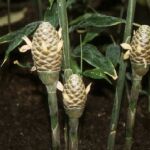
| Common Name: |
Ginger |
| Other Names: |
Black Ginger, Imber, Race Ginger, Zingiber |
| Botanical Name: |
Zingiber officinale |
| Genus: |
Zingiber |
| Family: |
Zingiberaceae |
| Location: |
United States, Asia, China, Guatemala, India, Jamaica, Japan, Nigeria, Tropical Asia Ginger is native to Asia, Africa and the West Indies and is cultivated in other tropical regions. It requires moist, fertile soil and light shade. |
| Cultivation: |
Well-drained, rich, neutral to alkaline soil, in sun or partial shade, with high humidity. Ginger is treated as an annual or biennial crop; plants need a 10-month growing season for optimum rhizome production. Oldest growths may be removed when new shoots appear. Ginger is prone to bacterial wilt in parts of India, China, and in Queensland, Australia. |
| Propagation: |
By division in late spring as growth begins. |
| Harvest: |
Rhizomes are lifted during the growing season for uses where lack of fibrousness is important, or when dormant for drying. Young, fresh rhizomes bought for cooking will keep for 2-3 months in a cool, dry place; they are soaked in brine and vinegar before processing in sugar syrup as crystallized ginger. Sliced fresh rhizomes are made into infusions and cordials for medicinal use. Mature rhizomes are peeled ("white ginger"), limed ("bleached") or left unpeeled ("coated") before storing whole, or ground for use in infusions, decoctions, tinctures, and powders. Oil is distilled from unpeeled, dried, ground rhizomes. |
| Height: |
1.5m (5ft) |
| Width: |
Indefinite |
| Hardiness: |
Z7-11 |
| Extraction: |
Steam Distillation |
| Key Uses: |
- Nausea and Vomiting
- Motion Sickness
- Arthritis
- Migraine Headache
|
| Parts Used: |
Roots, Rhizomes (jiang), oil For medicinal and culinary purposes, the fresh or dried rhizome is used. Younger gingerharvested at four to seven monthsis best for fresh preparations. Older gingerharvested at seven to nine monthsis better for dried use. Research documents optimal medicinal effects when ginger is harvested at eight months. |
| Color and Odor: |
The essential oil is yellow in color with a warm, fresh, spicy aroma. |
| Background: |
Used by the Chinese and Indians for its medicinal properties for thousands of years. Known to the ancient Greeks and Romans. Introduced to Europe by the Arabs between the 10th and 15th centuries; later introduced into South America by the Spaniards. |
| Properties: |
Warming, aperitif, carminative, stimulant, stomachic, tonic. A sweet, pungent, aromatic, warming herb that is expectorant, increases perspiration, improved digestion and liver function, controls nausea, vomiting, and coughing, stimulates the circulation, relaxes spasms, and relieves pain. |
| Components: |
Ginger contains large amounts of volatile oil, zingiberene, which is primarily responsible for the herb's pungency and aroma, as well as for its antibacterial and anti-inflammatory actions. Gingerol and shogaol are thought to account for nausea and indigestion relief. |
| Chemical Composition: |
The following compounds have been isolated from ginger: starch (up to 50 percent); protein (ca. 9 percent); lipids (6-8 percent) composed of triglycerides, phosphatidic acid, lecithins, and free fatty acids; a protease (2.26 percent); volatile oils (1-3 percent), the principal components of which are sesquiterpenes (bisabolene, zingiberone, and zingiberol) and various "pungent" principles, aromatic ketones known collectively as gingerols; vitamins (especially niacin and vitamin A); and resins. The pungent principles are thought to be most pharmacologically active components of ginger. Gingerol and its derivatives can be found in concentrations as high as 33 percent in ginger oleoresin. The fresh oleoresin will have a higher percentage of the more pungent gingerol, as gingerol can be dehydrated during storage to form shogaol or have it fatty acid moeity cleaved to form zingerone. The oleoresind is made by extracting the oily and resinous materials with the aid of a solvent (alcohol, hexane, or acetone). |
| Toxicity: |
Some individuals consuming high doses, that is, greater than the equivalent of 6 grams of dried powdered ginger alone on an empty stomach, may experience some gastrointestinal discomfort. Administration of 6 grams of dried powdered ginger has been shown to increase the exfoliateon of gastric surface epithelial cells in human subjects. This may cause some gastric distress and ultimately could lead to ulcer formation. Therefore, it is recommended that doses on a empty stomach be less than 6 grams. Ginger does not appear to be toxic. Although ginger extracts and several components in ginger have been shown to possess potent mutagenic activity, ginger also contains several equally potent antimutagenic substances. The significance of thie mutagenicity (the study was conducted in Escherichia coli, not the Ames test) has not been entirely determined, but the long historic use and lack of carcinogenic effect or toxicity in animals suggest that it is not a problem. In acute toxicity tests in mice, ginger extract administered as a lavage was tolerated up to 2.5 grams per kilogram with no mortality or side effects during a 7-day trial period. Increasing the dosage to 3.0-3.5 grams per kilogram resulted in a 10-30 percent mortality. In comparison, 600 milligrams of aspirin per kilogram produced mortality in 25 percent, stomach ulcers in 40 percent, and hypothermia in 60 percent. |
| Warning: |
This oil should not be used when there is excessive heat or inflammation, and is best used in lower concentrations as it may cause irritation in sensitive people. Not given to patients with inflammatory skin complaints, ulcers of the digestive tract, or high fever. |
| Drug Interactions: |
| Taking ginger with these drugs may increase the risk of bleeding or bruising: |
| Abciximab, (ReoPro) |
Alteplase, (Activase, Cathflo Activase) |
Antithrombin III, (Thrombate III) |
Argatroban, (Argatroban) |
| Aspirin, (Bufferin, Ecotrin) |
Aspirin and Dipyridamole, (Aggrenox) |
Bivalirudin, (Angiomax) |
Celecoxib, (Celebrex) |
| Choline Magnesium Trysalicylate, (Trilisate) |
Clopidogrel, (Plavix) |
Dalteparin, (Fragmin) |
Danaparoid, (Orgaran) |
| Diclofenac, (Cataflam, Voltaren) |
Diflusinal, (Apo-Diflusinal, Dolobid) |
Dipyridamole, (Apo-Dipiradol, Persantine) |
Drotrecogin Alfa, (Xigris) |
| Enoxaparin, (Lovenox) |
Eptifibatide, (Integrillin) |
Etodolac, (Lodine, Utradol) |
Fenoprofen, (Nalfon) |
| Flurbiprofen, (Ansaid, Ocufen) |
Fondaparinux, (Arixtra) |
Heparin, (Hepalean, Hep-Lock) |
Hydrocodone and Aspirin, (Damason-P) |
| Hydrocodone and Ibuprofen, (Vicoprofen) |
Ibritumomab, (Zevalin) |
Ibuprofen, (Advil, Motrin) |
Indobufen, (Ibustrin) |
| Indomethacin, (Indocin, Novo-Methacin) |
Ketoprofen, (Orudis, Rhodis) |
Ketorolac, (Acular, Toradol) |
Lepirudin, (Refludan) |
| Meloxicam, (MOBIC, Mobicox) |
Nabumetone, (Apo-Nabumetone, Relefan) |
Nadroparin, (Fraxiparine) |
Naproxyn, (Aleve, Naprosyn) |
| Oxaprozin, (Apo-Oxaprozin, Daypro) |
Piroxicam, (Feldene, Nu-Pirox) |
Reteplase, (Retevase) |
Rofecoxib, (Vioxx) |
| Salsalate, (Amgesic, Salflex) |
Streptokinase, (Streptase) |
Sulindac, (Clinoril, Nu-Sundac) |
Tenecteplase, (TNKase) |
| Tiaprofenic Acid, (Dom-Tiaprofenic, Surgam) |
Ticlopidine, (Alti-Ticlopidine, Ticlid) |
Tinzaparin, (Innohep) |
Tirofiban, (Aggrastat) |
| Tolmetin, (Tolectin) |
Urokinase, (Abbokinase) |
Valdecoxib, (Bextra) |
Warfarin, (Coumadin, Jantoven) |
| Taken ginger with these drugs may reduce the effectiveness of the drug: |
| Aluminum Hydroxide, (AlternaGel, Alu-Cap) |
Aluminum Hydroxide and Magnesium Carbonate, (Gaviscon Extra Strength, Gaviscon Liquid) |
Aluminum Hydroxide and Magnesium Hydroxide, (Maalox, Rulox) |
Aluminum Hydroxide and Magnesium Trisilicate, (Gaviscon Tablet) |
Aluminum Hydroxide, Magnesium Hydroxide, and Simethicone, (Maalox, Mylanta Liquid) |
| Calcium Carbonate, (Rolaids Extra Strength, Tums) |
Calcium Carbonate and Magnesium Hydroxide, (Mylanta Gelcaps, Rolaids Extra Strength) |
Cimetidine, (Nu-Cimet, Tagamet) |
Esomeprazole, (Nexium) |
Famotidine, (Apo-Famotidine, Pepcid) |
| Famotidine, Calcium Carbonate, and Magnesium Hydroxide, (Pepcid Complete) |
Lansoprazole, (Prevacid) |
Magaldrate and Simethicone, (Riopan Plus, Riopan Plus Double Strength) |
Magnesium Hydroxide, (Dulcolax Milk of Magnesia, Phillip's Milk of Magnesia) |
Magnesium Oxide, (Mag-Ox 400, Uro-Mag) |
| Magnesium Sulfate, (Epsom Salts) |
Nizatidine, (Axid, PMS-Nizatidine) |
Omeprazole, (Losec, Prilosec) |
Pantoprazole, (Pantoloc, Protonix) |
Rabeprazole, (Aciphex, Pariet) |
| Ranitidine, (Alti-Ranitidine, Zantac) |
Sodium Bicarbonate, (Brioschi, Neut) |
Sucralfate, (Carafate, Sulcrate) |
| Taking ginger with these drugs may increase the risk of hypoglycemia (low blood sugar): |
| Acarbose, (Prandase, Precose) |
Acetohexamide, (Acetohexamide) |
Chlorpropamide, (Diabinese, Novo-Propamide) |
Gliclazide, (Diamicron, Novo-Gliclazide) |
| Glimepiride, (Amaryl) |
Glipizide, (Glucotrol) |
Glipizide and Metformin, (Metaglip) |
Gliquidone, (Beglynor, Glurenorm) |
| Glyburide, (DiaBeta, Micronase) |
Glyburide and Metformin, (Glucovance) |
Insulin, (Humulin, Novolin R) |
Metformin, (Glucophage, Riomet) |
| Miglitol, (Glyset) |
Nateglinide, (Starlix) |
Pioglitazone, (Actos) |
Repaglinide, (GlucoNorm, Prandin) |
| Rosiglitazone, (Avandia) |
Rosiglitazone and Metformin, (Avandamet) |
Tolazamide, (Tolinase) |
Tolbutamide, (Apo-Tolbutamide, Tol-Tab) |
| Taking ginger with these drugs may interfere with the action of the drug: |
| Atenolol, (Apo-Tenol, Tenormin) |
Benazepril, (Lotensin) |
Captopril, (Capoten, Novo-Captopril) |
Carvedilol, (Coreg) |
| Enalapril, (Vasotec) |
Fosinopril, (Monopril) |
Labetalol, (Normodyne, Trandate) |
Lisinopril, (Prinivil, Zestril) |
| Taking ginger with these drugs may alter the effects of the drug: |
| Bepridil, (Vascor) |
Diltiazem, (Cardizem, Tiazac) |
| Felodipine, (Plendil, Renedil) |
Isradipine, (DynaCirc) |
| Nifedipine, (Adalat CC, Procardia) |
| Taking ginger with these drug may be harmful: |
| Digitalis, (Digitek, Lanoxin)may increase the drugs effects. |
|
| Planet: |
Mars |
| Element: |
Fire |
| Direction: |
South |
| Magical Influences: |
Magical energy, Physical energy, Sex, Love, Money, Courage. |
| Uses: |
- Digestive SytemHas a warming action on the stomach and slows digestion.
- Respiratory SystemGinger is powerfully expectorant, clearing the lungs of accumulated catarrh and mucus. Also good for congested sinuses or colds, flu and bronchitis, especially with chills or shivering. Beneficial to bronchial asthma.
- Nervous SytemHelpful for travel sickness and "morning sickness" in pregnancy, reducing nausea and vomiting.
- Muscular SystemMassaged into the limbs, ginger increases the flow of blood to the extremities for cold, rheumatic pains in the hands and feet.
- Skeletal SystemVery helpful in warming swollen joints aggravated by external dampness.
- EmotionsWarms the emotions, sharpens the senses, aids in memory and is grounding.
|
| Indications: |
Ginger alleviates stomachaches, menstrual and intestinal cramps, heartburn and nausea due to pregnancy and motion sickness. The herb also improves circulation, eases inflammation and increases mobility in painful muscles and joints. As an antibacterial, it can be used internally or externally to prevent flu, colds and infections. |
| History and Folk Use: |
Ginger has been used for thousands fo years in China for medicinal purposes. Chinese records dating from the fourth century BCE indicate that it was used to treat numerous conditions: stomachache, diarrhea, nausea, cholera, hemorrhage, rheumatism, and toothaches. It was used by Eclectic physicians in this country in the late 1800s as a carminative, diaphoretic, appetite stimulant, and local counterirritant. Ginger is widely used as a spice, especially in Asian and Indian dishes. It is also used in many baked goods, beverages (ginger ale), candy, liqueurs, and cosmetic products (perfumes, soaps, creams, etc.). |
| Pharmacology: |
Ginger possesses numerous pharmacological properties, the most relevant being its antioxidant effects; inhibition of prostaglandin, thomboxane, and leukotriene synthesis; inhibition of platelet aggregation; cholesterol-lowering actions; choleretic effects; cardiotonic effects; gastrointestinal actions; thermogenic properties; and antibiotic activities. Antioxidant EffectsGinger's strong antioxidant properties led to an investigation of its ability to prevent the development of rancidity in meat products. Ginger was shown to prolong the shelf life of fresh, frozen and precooked pork patties. Since the use of many synthetic antioxidants is prohibited by law, ginger may one day be used commercially to extend the shelf life of meats and other foods. In another study, curcumin from turmeric was found to be about thirty times more potent than zingerone in preventing lipid peroxidation. Effects on Prostaglandin MetabolismNumerous constituents in ginger are potent inhibitors of prostaglandin and leukotriene synthesis. The most potent components appear to be the pungent principles, although the aqueous extract has also demonstrated inhibition. Inhibition of prostaglandin and leukotriene formation could help explain ginger's historical use as an anti-inflammatory agent; fresh ginger contains a protease whose effect on inflammation may be similar to that of other plant proteases. (e.g., bromelain, ficin, and papain). Effects on PlateletsGinger, like garlic and onions, inhibits platelet aggregation. However, ginger's effects may be far more powerful. In a comparative study, and aqueous extract of ginger was shown to exert greater inhibitory effects on platelet aggregation than aqueous garlic and onion extracts. Ginger also inhibited thromboxane formation and proaggregatory prostaglandins more effectively than onion and garlic. Ginger, but not onion or garlic, also significantly reduced platelet lipid peroxide formation. The superiority of ginger over onions was also demonstrated in a controlled study. Female volunteers given either 70 grams of raw onions or 5 grams of raw ginger demonstrated that ginger has a pronounced effect in lowering platelet thromboxane production, while onion actually produced a mild elevation (pooled results).Cholesterol-Lowering and Hepatic EffectsGinger has been shown to reduce significantly serum and hepatic cholesterol levels in cholesterol-fed rats by impairing cholesterol absorption as well as by stimulating the conversion of cholesterol to bile acids. In addition, ginger has also been shown to increase bile secretion. Therefore, ginger works to lower cholesterol by promoting its excretion and impairing its absorption. Cardiotonic propertiesGingerol has shown potent cardiotonic activity (positive ionotropic and chronotropic effects) on isolated guinea pig left atria. These effects are a result of acceleration of calcium uptake by the heart muscle. Individuals with heart problems or high blood pressure are probably better off using fresh ginger rather than dried preparations. This recommendation is based not only on the fact that gingerol is the more potent cardiotonic, but also because shogaol produces blood pressure-elevating effect in animals. Gingerol is found predominantly in fresh ginger, while shogaol is rarely found in fresh ginger. Analgesic EffectsGinger has demonstrated analgesic effects in experimental studies in animals. This effect is thought to be a result of shogaol inhibiting the release of substance P, in a fashion similar to capsaicin, the pungent principle of capsicum. Gastrointestinal Smooth Muscle EffectsOne interesting aspect of ginger is its ability to simultaneously improve gastric motility while exerting antispasmodic effects. This is consistent with its use as a gastrointestinal tonic. A lipophilic ginger extract was shown to enhance gastric motility as evidenced by increased intestinal transport of a charcoal meal fed to rats, and various fat-soluble components (such as galanolactone) of ginger have demonstrated antagonism of serotonin receptor sites. This latter mechanism may be responsible for ginger's antispasmodic effects of visceral and vascular smooth muscle. Ginger has been shown to inhibit diarrhea. Antiulcer EffectsGinger demonstrates significant antiulcer effects in a variety of animal models. Ginger prevents ulcer formation due to ethanol, indomethacin, aspirin and other ulcer-causing compounds. The pungent principles appear to be responsible for this effect. Interestingly, in one study, roasted ginger demonstrated inhibition of ulcer formation in three gastric ulcer models while dry ginger had no such effect. Thermogenic PropertiesGinger is noted for its apparent ability to warm the body and has historically been used as a diaphoretic. In animal studies, ginger has been shown to help maintain body temperature and inhibit serotonin-induced hypothermia. Crude extracts and the pungent components of ginger increase oxygen consumption, perfusion pressure, and lactate production in the perfused rat hind limb. These effects signify increased thermogenesis. Gingerol is the most potent thermogenic component of ginger. A human study demonstrated that consuming a ginger sauce (containing unspecified amounts of ginger principles) with a meal produced no significant effect on metabolic rate. However, there were two problems with this study: (1) the concentration of gingerol in the preparation used was probably low or zero and (2)the effective concentration range of gingerol for its thermogenic effects is quite narrow. Given ginger's historical use as a "warming" substance, these scientific investigations appear to support its use as a diaphoretic and thermogenic aid, although confirmation in humans is still lacking. Antibiotic ActivityGinger, shogaol, and zingerone have been shown to inhibit strongly the growth of Salmonella typhi, Vibrio cholerae, and Tricophyton violaceum, while aqueous extracts at 2.5, 5, and 25 percent concentration are effective against Trichomonas vaginalis. |
| Clinical Applications: |
Ginger is widely used as a condiment for its unique flavors, but from the above-described pharmacology it obviously has important medicinal effects as well. In general, like many other culinary herbs and spices such as garlic and onions, ginger provides many health-promoting effects. Specifically, ginger provides benefit to many body systems, including the digestive (particularly liver, and gallbladder) and cardiovascular systems. Historically, the majority of complaints for which ginger was used concerned the gastrointestinal system. A clue to ginger's efficacy in alleviating gastrointestinal distress is offered in several recent double-blind studies on motion sickness, hyperemesis gravidum, and postoperative nausea and vomiting. Human studies have also shown a positive effect in cases of arthritis and migraine headaches. Motion SicknessGinger was first shown to be effective in treating motion sickness by Mowrey and Clayson in 1982. In their study, ginger (940 milligrams) was shown to be far superior to Dramamine (100 milligrams) in relieving symptoms of nausea and vomiting. Since this initial study several better-designed follow-up studies have studied the effectiveness of ginger as a motion sickness medication. The inclusion of ginger in motion sickness trials prompted the National Aeronautics and Space Administration (NASA) to fund a study at Louisiana State University. This study compared ginger, both fresh and dry powdered, to scopolamine by measuring the number of head movement subjects in a rotating chair could make before reaching an end point of motion sickness (i.e., vomiting). Ginger was not shown to produce any protection against motion sickness in this model or in two additional protocols (vestibular stimulation only and combined vestibular-visual stimulation). However, in a perhaps more real-life test, ginger (1 gram) given to naval cadets unaccustomed to sailing in heavy seas, was shown to reduce cold sweating and the tendency to vomit compared to a placebo in a double-blind trial. Mowrey and Clayson proposed that the antimotion sickness effects of ginger were due to local gastrointestinal tract effects rather than central nervous system effects. Although ginger's mechanism of action in alleviating gastrointestinal distress has yet to be fully explained, there is evidence to support this hypothesis. Ginger has been shown to inhibit partially the excessive gastric motility characteristic of motion sickness. Providing further support for a gastric versus a central nervous system mechanism of action, one study clearly demonstrated that neither the inner ear (vestibular) nor the visual system, both of which are of critical importance in the occurence of motion sickness, was influenced by ginger (1 gram). However, other results suggest that ginger may dampen vestibular impulses to the autonomic centers of the brain. The overall effectiveness of ginger in motion sickness has yet to be determined. Issues raised by these studies include the variability in the quality of commercial ginger preparations and the time required for ginger to produce its effects. Commercial preparations vary widely in chemical composition and often contain adulterants; in the ginger study conducted at sea, ginger reduced symptoms of cold sweating and vomiting only after 4 hours. In other words, it appears that ginger may prove to be more effective when well-defined preparations are given at least 4 hours prior to experience stressful motion. Nausea and VomitingGinger's antiemetic action has been studied in hyperemesis gravidum, the most severe form of pregnancy-related nausea and vomiting. This condition usually requires hospitalization. In a double-blind randomized cross-over trial, 250 milligrams of ginger root powder administered four times a day brought about a significant reduction in both the severity of the nausea and the number of attacks of vomiting in nineteen of twenty-seven cases of early pregnancy (less than 20 weeks). These clinical results, along with ginger's safety and the relatively small dose required, support the use of ginger in nausea and vomiting in pregnancy, particularly in view of the problems (e.g., teratogenicity) with antiemetic drugs. Ginger is becoming a well-accepted prescription even in orthodox obstetrical practices. The antiemetic action of ginger was also observed in women who had undergone major gynecological surgery. In a double-blind study, 500 milligrams of dry powdered ginger root was shown to reduce significantly the incidence of nausea compared to placebo; the effects of ginger were similar to those of the drug metoclopramide. Inflammatory ConditionsGinger's ability to inhibit the formation of inflammatory prostaglandins, thromboxanes, and leukotrienes, along with its strong antioxidant activities and protease component, suggest a possible benefit in inflammatory conditions. To test this hypothesis, a preliminary clinical study was conducted on seven patients with rheumatoid arthritis, in whom conventional drugs had provided only temporary or partial relief. One patient took 50 grams per day of lightly cooked ginger while the remaining took either 5 gram of fresh or 0.1-1 gram of powdered ginger daily. All patients reported substantial improvement, including pain relief, increased joint mobility, and decreased swelling and morning stiffness. In the follow-up to this study, twenty-eight patients with rheumatoid arthritis, eighteen with osteoarthritis, and ten with muscular discomfort who had been taking powdered ginger for periods ranging from 3 months to 2.5 years were evaluated. On the basis of clinical observations, Srivastava and Mustafa reported that 75 percent of the arthritis patients and 100 percent of the patients with muscular discomfort experienced relief in pain or swelling. The recommended dosage was 500 to 1000 milligrams per day, but many patients took three to four times this amount. Patients taking the higher dosages also reported quicker and better relief. Ginger has also been reported to be beneficial in migraine headache. Given ginger's pharmacological activities on platelet function and inflammation, this recommendation makes sense. |
| Medicinal Uses: |
Internally for motion sickness, nausea, morning sickness, indigestion, colic, abdominal chills, colds, coughs, influenza, and peripheral circulatory problems. Externally for spasmodic pain, rheumatism, lumbago, menstrual cramps, and sprains. Often combined with Gentiana lutea (See, Yellow Gentian) and Rheum palmatum (See, Chinese Rhubarb) for digestive complaints. In Chinese medicine, internally for coughs, cold, diarrhea, vomiting, and abdominal pain associated with cold (fresh rhizome); uterine bleeding and blood in the urine (fresh, carbonized rhizome); abdominal fullness and edema (rhizome peel); coldness associated with shock, digestive disturbances arising from deficient spleen energy, and chronic bronchitis (dried rhizome). To treat flatulence, motion sickness, morning sickness, rheumatoid arthritis, loss of appetite, upper respiratory infections, bronchitis, cholera, and burns; to relieve pain. Germany's Commission E has approved the use of ginger to treat loss of appetite, motion sickness, and dyspeptic complaints such as heartburn and bloating. |
| Culinary Uses: |
Fresh young rhizomes (green ginger) are juiced, eaten raw, preserved in syrup, and candied; also used in soups, marinades, curries, chutneys, pickles, meat and fish dishes, and SE Asian stir-fried dishes. Pickled ginger (gari) is used in Japanese cooking, especially to flavor sushi. Dried, ground ginger is used to flavor cakes, cookies, curries, chutneys, and sauces. |
| Economic Uses: |
Oil is used in perfumery. Dried ground ginger and essential oil are used in commercial food flavoring, especially in candy, soft drinks, and condiments. Extracts are added to herb teas, cordials and soft drinks (notably ginger beer and ginger ale). |
| Uses and Blends: |
Preparation of the Tea: A warming brew, ginger tea is ideal for chasing away colds and chills. To make the tea, pour a cup of boiling water over 1 tsp. dried gingerroot (or 2 tsp. of fresh gingerroot). Steep for 10-15 min. and strain. Sweeten with honey and lemon, if desired. For a digestive stimulant, boil a few slices of the root in a cup of water and drink it 30 min. before meals. |
For Relief of Abdominal Bloating: A tea made from the skin of fresh gingerroot, rather than from slices of the peeled root, may ease bloating and the fluid retention from edema. The root's skin contains compounds that relax peripheral blood vessels and increase blood flow. |
For Improved Circulation: Ginger stimulates circulation, which is why it fights chills and warms cold hands and feet. Also, like garlic, ginger inhibits blood clotting and thus can prevent arteriosclerosis. |
For Improved Digestion: Ginger is a classic tonic for improving digestion, easing the flow of food through the digestive tract and reducing irritation to the intestinal walls. It may help protect the stomach from ulcers and some of alcohol's damaging effects. |
For Cancer Prevention: Ginger may be useful in the fight against cancer. Gingerroot is known to have antioxidant effects; it contains compounds that protect cells from excess free radicals, which can trigger the kinds of cell mutations that can lead to cancer. Ginger has also been shown to inhibit the growth of certain fungi that produce potent carcinogens. |
For Nausea and Vomiting: 1/2 tsp. Gingerroot 1/2 tsp. Clove Blossoms 1 tsp. Chamomile Flowers Pour 1 cup of boiling water over the herbs, steep for 10 min. and then strain. Breathe in the steam to calm nausea. When the tea is cool, sip it slowly. |
For Relief of Raynaud's Syndrome or For Warming Hands and Feets: 1/2 tsp. Gingerroot 1/2 tsp. Dried Cayenne 1/2 tsp. Prickly-Ash Bark Pour 1 cup of freshly boiled water over the herbs, steep for 10-15 min. and strain. For best results, drink the tea while quite hot. |
For Morning Sickness: 1/2 tsp. Gingerroot 1/2 tsp. Black Horehound Flowers and Leaves. 1/2 tsp. Roman Chamomile Flowers. Pour 2 cups of freshly boiled water over the herbs and steep for 15 min.; strain. Sip slowly until symptoms subside. This tea may be stored for a few days in a covered container and reheated. |
| Methods of Administration: |
Flatulence Prevention Prevent flatulence from beans by adding 1 tbsp. of powdered ginger to 1 cup of dried beans. Soak overnight and rinse.
Tea For gastrointestinal or menstrual cramps, pour 1 cup of boiling water over 1 tsp. of dried or 2 tsp. of fresh ginger. Steep for 10 min.; strain. Drink 1 cup of hot tea up to 6 times daily or after meals.
Tea Blend For bronchitis, colds, sore throats, coughs and flu, mix 1/2 tsp. each of ginger and Echinacea. Pour 1 cup of boiling water over 1 tsp. of the blend. Steep 10 min.; strain. Add the juice from half a lemon. Drink 1 cup, up to 6 times daily.
Vinegar For nausea due to motion sickness, high altitudes or pregnancy, make ginger vinegar. Add 1/2 cup of freshly sliced ginger to 1 cup cider vinegar; steep for 10-14 days, and strain. Store in a glass jar in the refrigerator. Take 1 tsp. of the undiluted vinegar 6 times daily.
Tincture For joint and muscle pain, add 1/2 cup of chopped fresh ginger to 1/2 cup each of water and grain alcohol. Steep in a glass jar for 4-6 weeks; strain. Take 40-60 drops, or apply it topically as a liniment, 3 times daily. |
| Typical Dose: |
A typical dose of ginger may range from 1 to 4 gm per day in capsule or powder form. There remain many questions concerning the best form of ginger and the proper dosage. Most research studies have utilized 1 gram of dry powdered ginger root. Practically speaking, this is a small dose of ginger. For example, ginger is commonly consumed in India at a daily dose of 8 to 10 grams. Furthermore, although most studies have used powdered ginger root, fresh (or possibly freeze-dried) ginger root at an equivalent dosage may yield even better results it contains higher levels of gingerol as well as the active protease. In the treatment of nausea and vomiting due to motion sickness, pregnancy, or surgery a dosage of 1 to 2 grams of dry powdered ginger per day may be effective. This would be equivalent to approximately 10 grams or one-third of an ounce of fresh ginger root, roughly a 1/4 inch slice. For inflammatory conditions such as rheumatoid arthritis, the dosage should be double this amount. |
| Possible Side Effects: |
Ginger's side effects include bloating, flatulence, and heartburn. |
| Lab Test Alterations: |
May increase plasma partial thromboplastin time (PTT), prothrombin time (PT), and international normalized ration (INR) levels in those who are also taking warfarin. |
| Disease Effects: |
- May interfere with attempts to control blood sugar in diabetes.
- May worsen bleeding disorders and increase the risk of bruising and bleeding.
- May worsen cases of high or low blood pressure by interfering with attempts to control blood pressure.
|
| Supplement Interactions: |
Increased risk of bleeding when used with herbs and supplements that might affect platelet aggregation, such as Angelica, Danshen, Garlic, Ginkgo Biloba, Red Clover, Turmeric, White Willow, and others. |
| Bibliography: |
Aromatherapy Blends and recipes by Franzesca Watson Copyright © 1995 Thorsons, Harper Parker Publishing Inc. Pp 108-109 Magical Aromatherapy by Scott Cunningham Copyright © 1989 Llewellyn Publications, Inc. Pp 91-92 The Encyclopedia of Herbs by Deni Bown Copyright © 1995, 2001 Dorling Kindersley Limited. pps.410-411 The Essential Herb-Drug-Vitamin Interaction Guide by Geo. T. Grossberg,MD and Barry Fox,PhD Copyright©2007 Barry Fox,PhD. Pp.236-239 The Complete Guide to Natural Healing Copyright©1999 International Masters Publishers,AB Group 1 Card 89, Group 2 Card 30 Medicinal Herbs, Therapeutic Teas. The Healing Power of Herbs by Michael T. Murray N.D. Copyright©1995 Michael T. Murray. Pp.132-140 |
|