| Common Name: |
Passionflower |
| Other Names: |
Apricot Vine, Grenadilla, Jamaican Honeysuckle, Maracoc, Maypops, Passion Fruit, Passion Vine, Water Lemon, Wild Passionflower. |
| Botanical Name: |
Passiflora incarnata |
| Genus: |
Passiflora |
| Family: |
Passifloraceae |
| Native Location: |
E USA |
| Cultivation: |
Well-drained, sandy, slightly acid soil in sun. Cut back in early spring. Cucumber mosaic virus may attack leaves. |
| Propagation: |
By seed sown in spring, at 18-21°C (64-79°F); by semi-ripe cuttings in summer; by layering in spring. Germination is slow and erratic. |
| Harvest: |
Plants are cut when fruiting and dried for use in infusions, liquid extracts, tablets, and tinctures. Fruits for culinary use are picked when ripe in autumn and used fresh or cooked. |
| Warnings and Precautions: |
High doses are contraindicated during pregnancy.
Don't take if you:
Are pregnant, think you may be pregnant or plan pregnancy in the near future.
Consult your doctor if you:
Take this herb for any medical problem that doesn't improve in 2 weeks (There may be safer, more effective treatments.)
Take any medicinal drugs or herbs including aspirin, laxatives, cold and cough remedies, antacids, vitamins, minerals, amino acids, supplements, other prescription or non-prescription drugs.
Are using other sleeping pills
Pregnancy:
Dangers outweigh any possible benefits. Don't use.
Breastfeeding:
Dangers outweigh any possible benefits. Don't use.
Infants and Children:
Treating infants and children under 2 with any herbal preparation is hazardous.
Others:
This product will not help you. It may cause toxic symptoms.
Storage:
Store in cool, dry area away from direct light, but don't freeze.
Store safely out of reach of children.
Don't store in bathroom medicine cabinet. Heat and moisture may change the action of the herb.
Safe Storage:
Consult your doctor for the appropriate dose for your condition.
|
| Height: |
2-8m (6-25ft) |
| Hardiness: |
Z7-10 |
| History: |
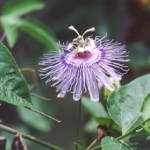
Passionflower is a subtropical vine that produces sweet-tasting, yellow-colored, edible fruits (called grenadillas, maypops, or water lemons) and beautiful, aromatic, lavender or white blossoms with a bright pink or purple inner ring.
Originally native to southern North America and to South America, passionflower was used for centuries by Native Americans as an aphrodisiac, a calming tonic, a digestive aid, and an eye remedy. Early Spanish explorers and Christian missionaries name the plant passiflora—or "flowers of the passion"—because they believed different parts of the plant symbolized Christ's persecution by the first-century Romans. The fruit's curly tendrils were said to represent the whips used to lash him. The center corona resembled Christ's crown of thorns. The five stamens stood for the five wounds on his hands, feet, and chest. And the five sepals and five petals represented his ten most loyal apostles (Excluded from the latter group were Judas Iscariot, who betrayed Christ to the Romans and later hanged himself, and St. Peter, who denied he knew Christ at all, but who later recanted and became the early church's first pope.) |
| Parts Used: |
All above ground parts, Whole plant, fruits, flowers. |
| Chemical Constituents: |
Cyanogenic glycosides
Harmaline
Harman
Harmine
Harmol
|
| Properties: |
A bitter, sedative, cooling herb that releives pain, relaxes spasms, and lowers blood pressure. |
| Known Effects: |
Depresses nerve transfer in spinal cord and brain
Increases respiratory rate
Slightly depresses central nervous system
Causes hallucinations
Miscellaneous Information:
Smoking passionflower reportedly causes mental changes similar to marijuana.
It's available in capsules, herbal remedies or tinctures.
No good human studies of clinical effectiveness exist.
|
| Possible Additional Effects: |
May reduce headaches
May aid against convulsions
May help treat insomnia
Potential "nerve tonic" for Parkinson's
|
| Medicinal Uses: |
Internally for nervous tension, anxiety, insomnia, irritability, tension headache, asthma, irritable bowl syndrome, premenstrual tension, nervous tachycardia, hypertension, and shingles; also to assist withdrawal from addictive drugs, including Benzodiazepine and Valium. Combines well with Chamaemelum nobile (See, Roman Chamomile), Humulus lupulus (See, Hops), and Valeriana officinalis (See, Valerian) for drug addiction.
To treat anxiety, hysteria, and nervous gastrointestinal problems; to treat opiate withdrawal. Germany's Commission E has approved the use of passion flower to treat insomnia and nervousness.
Passionflower has antispasmodic, hypnotic, hypotensive, pain-relieving, and sedating properties. Research confirms that passionflower depresses central nervous system activity, and it is most frequently prescribed for anxiety, excessive worry, heart palpitations, insomnia, pain, and stress. It also lowers high blood pressure, treats crampy indigestion, and relieves many of the symptoms of drug and alcohol withdrawal. Some practitioners prescribe passionflower for asthma, hiccups, neuralgia, Parkinson's disease, and shingles. |
| Typical Dose: |
A typical dose of passion flower is approximately 1 tsp of dried herb mixed with 150 ml of boiling water, steeped for 10 minutes, strained and taken as a tea. |
| Preparation: |
Passionflower is available as dried herb and in teas and tinctures. For occasional insomnia: to make a tea, pour 1 cup of boiling water over 2 teaspoons dried herb and steep for 15 minutes. Strain, and drink 1 cup in the evening. Passionflower is often combined with chamomile, hops, and/or valerian in calming and mildly sedating teas or tinctures. It is also a standard ingredient in commercial homeopathic remedies.
For chronic anxiety, insomnia, depression, pain, and stress: Use only at standard doses and under the supervision of a qualified medical practitioner. |
| Caution: |
In the wrong doses, passionflower can have strong hypnotic, narcotic, and sedative effects, especially in sensitive individuals. As part of a long-term treatment plan, it should be taken under the care of a qualified practitioner. Use only professionally prepared products and never harvest your own herb. Do not use if you are pregnant or trying to conceive. Do not combine passionflower with prescription sedatives, and do not use it during the day if you drive or operate heavy machinery.
Minor side effects may include gastric upset and diarrhea. Discontinue use and call your practitioner if these occur. More serious side effects may include excessive daytime sleepiness and oversedation. |
| Toxicity: |
Rated relatively safe when taken in appropriate quantities for short periods of time. |
| Adverse Reactions, Side Effects, or Overdose Symptoms |
| Signs and Symptoms |
What to Do |
|
| Convulsions |
Seek emergency treatment |
| Decreased body temperature |
Discontinue. Call doctor immediately. |
| Diarrhea |
Discontinue. Call doctor immediately. |
| Hallucinations |
Seek emergency treatment |
| Muscle paralysis, including muscles used in breathing |
Seek emergency treatment |
| Nausea, Vomiting, Upset Stomach |
Discontinue. Call doctor immediately. |
| Sleepiness |
Do not operate machinery or drive |
|
| Possible Side Effects: |
Passion flower's side effects include nausea, vomiting and allergic reactions. |
| Drug Interactions: |
| Taking passion flower with these drugs may increase the risk of bleeding or bruising: |
| Abciximab, (ReoPro) |
Aspirin, (Bufferin, Ecotrin) |
Celecoxib, (Celebrex) |
Enoxaparin, (Lovenox) |
Etodolac, (Lodine, Utradol) |
Heparin, (Hepalean, Hep-Lock) |
| Ibuprofen, (Advil, Motrin) |
Indomethacin, (Indocin, Novo-Methacin) |
Ketoprofen, (Orudis, Rhodis) |
Ketorolac, (Acular, Toradol) |
Meloxicam, (MOBIC, Mobicox) |
Naproxen, (Aleve, Naprosyn) |
| Piroxicam, (Feldene, Nu-Pirox) |
Rofecoxib, (Vioxx) |
Ticlopidine, (Alti-Ticlopidine, Ticlid) |
Urokinase, (Abbokinase) |
Warfarin, (Coumadin, Jantoven) |
| Taking passion flower with these drugs may increase the risk of excessive sedation and mental depression and impairment: |
| Acetaminophen and Codeine, (Capital and Codeine, Tylenol with Codeine) |
Alfentanil, (Alfenta) |
Alprazolam, (Apo-Alpraz, Xanax) |
Amobarbital, (Amytal) |
Amobarbital and Secobarbital, (Tuinal) |
Aspirin and Codeine, (Coryphen Codeine) |
| Belladonna and Opium, (B&O Supprettes) |
Bromazepam, (Apo-Bromazepam, Gen-Bromazepam) |
Brotizolam, (Lendorm, Sintonal) |
Buprenorphine, (Buprenex, Subutex) |
Buprenorphine and Naloxone, (Suboxone) |
Butabarbital, (Butisol Sodium) |
| Butalbital, Acetaminophen, and Caffeine, (Esgic, Fioricet) |
Butalbital, Aspirin, and Caffeine, (Fiorinal) |
Butorphanol, (Apo-Butorphanol, Stadol) |
Chloral Hydrate, (Aquachloral Supprettes, Somnote) |
Chlordiazepoxide, (Apo-Chlordiazepoxide, Librium) |
Clobazam, (Alt-Clobazam, Frisium) |
| Clonazepam, (Klonopin, Rivotril) |
Clorazepate, (Tranxene, T-Tab) |
Codeine, (Codeine Contin) |
Dexmedetomidine, (Precedex) |
Diazepam, (Apo-Diazepam, Valium) |
Dihydrocodeine, Aspirin, and Caffeine, (Synalgos-DC) |
| Diphenhydramine, (Benadryl Allergy, Nytol) |
Estazolam, (ProSom) |
Fentanyl, (Actiq, Duragesic) |
Flurazepam, (Apo-Flurazepam, Dalmane) |
Glutethimide, (Glutethimide) |
Haloperidol, (Haldol, Novo-Peridol) |
| Hydrocodone and Acetaminophen, (Vicodin, Zydone) |
Hydrocodone and Aspirin, (Damason-P) |
Hydrocodone and Ibuprofen, (Vicoprofen) |
Hydromorphone, (Dilaudid, PMS-Hydromorphone) |
Hydroxyzine, (Atarax, Vistaril) |
Levomethadyl Acetate Hydrochloride, (Levomethadyl Acetate Hydrochloride) |
| Levorphanol, (LevoDromoran) |
Loprazolam, (Dormonoct, Havlane) |
Lorazepam, (Ativan, Nu-Loraz) |
Meperidine, (Demerol, Meperitab) |
Meperidine and Promethazine, (Meperidine and Promethazine) |
Mephobarbital, (Mebaral) |
| Methadone, (Dolophine, Methadose) |
Methohexital, (Brevital, Brevital Sodium) |
Midazolam, (Apo-Midazolam, Versed) |
Morphine Sulfate, (Kadian, MS Contin) |
Nalbuphine, (Nubain) |
Opium Tincture, (Opium Tincture) |
| Oxycodone, (OxyContin, Roxicodone) |
Oxycodone and Acetaminophen, (Endocet, Percocet) |
Oxycodone and Aspirin, (Endodan, Percodan) |
Oxymorphone, (Numorphan) |
Paregoric, (Paregoric) |
Pentazocine, (Talwin) |
| Pentobarbital, (Nembutal) |
Phenobarbital, (Luminal Sodium, PMS-Phenobarbital) |
Phenoperidine, (Phenoperidine) |
Prazepam, (Prazepam) |
Primidone, (Apo-Primidone, Mysoline) |
Promethazine, (Phenergan) |
| Propofol, (Diprivan) |
Propoxyphene, (Darvon, Darvon-N) |
Propoxyphene and Acetaminophen, (Darvocet-N 50, Darvocet-N 100) |
Propoxyphene, Aspirin, and Caffeine, (Darvon Compound) |
Quazepam, (Doral) |
Remifentanil, (Ultiva) |
| Secobarbital, (Seconal) |
Sodium Oxybate, (Xyrem) |
Sufentanil, (Sufenta) |
S-Zopiclone, (Lunesta) |
Temazepam, (Novo-Temazepam, Restoril) |
Tetrazepam, (Mobiforton, Musapam) |
| Thiopental, (Pentothal) |
Triazolam, (Apo-Triazo, Halcion) |
Zaleplon, (Sonata, Stamoc) |
Zolpidem, (Ambien) |
Zopiclone, (Alti-Zopiclone, Gen-Zopiclone) |
| Taking passion flower with this drug may be harmful: |
| Selegiline, (Eldepryl)—may increase the therapeutic and/or adverse effects of the drug. |
|
| Supplement Interactions: |
- Increase risk of bleeding when used with herbs and supplements that might affect platelet aggregation, such as Angelica, Danshen, Garlic, Ginger, Ginkgo Biloba, Red Clover, Turmeric, White Willow, and others.
- May enhance therapeutic and adverse effects of herbs and supplements that have sedative properties, such as 5-HTP, Kava Kava, St. John's Wort, and Valerian.
|
| Culinary Uses: |
Ripe fruits are eaten raw, and made into jams, jellies, wines, and fruit-based drinks. Flowers are made into syrup. |
| Bibliography: |
Encyclopedia of Herbs by Deni Brown Copyright © 1995, 2001 Dorling Kindersley Limited. Pg 303
The Essential Herb-Drug-Vitamin Interaction Guide by Geo. T. Grossberg,MD and Barry Fox,PhD Copyright©2007 Barry Fox,PhD. Pp.362-365
The Modern Herbal Primer by Nancy Burke Copyright©2000 Yankee Publishing, Inc. pp. 15-16
Vitamins, Herbs, Minerals & Supplements The Complete Guide by H. Winter Griffith, MD Copyright©1998 pp. 406-407 |