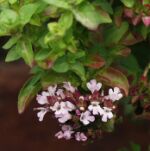
| Common Name: |
Melissa |
| Other Names: |
Balm, Balm Mint, Bee Balm, Cure-All, Dropsy Plant, Garden Balm, Honey Plant, Lemon Balm, Sweet Balm |
| Botanical Name: |
Melissa officinalis |
| Genus: |
Melissa |
| Family: |
Lamiaceae |
| Native Location: |
North America, France, Spain, S Europe, W Asia, N Africa |
| Cultivation: |
Moist soil in sun or partial shade. Cut back plants after flowering to produce a fresh crop of leaves. |
| Propagation: |
By seed sown in situ in autumn or spring (species only); by division or stem cuttings in autumn or spring. |
| Harvest: |
Plants are cut as flowering begins and used fresh or dried for infusions, dry extracts, liquid extracts, ointments, and tinctures. Fresh foliage is distilled for oil. |
| Height: |
30-80cm (12-32in) |
| Width: |
30-45cm (12-18in) |
| Hardiness: |
Z4-9 |
| Variations: |
All Gold
Has bright yellow foliage. Tends to scorch in full sun. |
Aurea
Syn. Variegata
Has yellow variegated leaves. |
Citronella
Is compact, with high oil content, to 0.4 percent. Mildew resistant
Height: 25-30cm (10-12in) |
Compacta
Is dwarf and non-flowering.
Height: 15cm (6in)
Width: 30cm (12in) |
|
Quedlingburger Neiderliegende
Is tall and Uniform, with an oil content of 0.2 percent. Good as a field crop.
Height: 50-60cm (20-24in) |
|
| Extraction: |
Steam Distillation |
| Parts Used: |
Whole Plant, Leaves, Oil |
| Color and Odor: |
The essential oil is pale yellow in color and has a delightful, crisp lemony aroma with a sweet undertone. |
| Background: |
Medicinally important in Europe since medieval times, melissa was considered the "elixir of life" it was included in the preparation of tonic water made in the fourteenth century by the Carmelite nuns in France. Melissa flowers are very attractive to bees, and melissa honey has been prized since ancient times. |
| History: |
Bees have always loved the lushly scented lemon balm plant and swarm in droves to it—hence the herb's many bee-associated common names. The ancient Roman scholar Pliny was so impressed by this strong affinity between the plant and bee that he wrote in one of his journals, "When they [bees] are strayed away, they do find their way home by it." In latter days, commercial beekeepers picked up on this hint from Pliny as smeared the inside of hives with lemon balm oil to keep their bees close to home. Ironically, bees are the only insects that love lemon balm. The plant's oil repels other insects and is still used today as an insecticide.
The ancient Greeks gave lemon balm its official name—melissa is Greek for "bee"—and both the Roman and Greeks used the herb to treat dog bites, insect bites and infected wounds. They also discovered its calming and pain-relieving effects when they mixed the herb with wine. In the ancient Middle East, Arab physicians used lemon balm to treat depression and heart ailments. By the 1500s, many European herbalists viewed lemon balm as a panacea for all life's ills. The fifteenth-century Swiss alchemist and physician Paracelsus called lemon balm the "elixir of life", and by the late seventeeth century, Britain's official London Dispensary of medicinal herbs listed lemon balm as a surefire longevity herb (and a cure for baldness!). This inspired many apocryphal tales of lemon balm's miraculous powers, including that of John Hussey, who lived in Sydenham, England, and lived to the ripe old age of 116 by drinking lemon balm tea every morning for 50 years. Despite such glowing accounts, lemon balm began to fall out of favor by the nineteenth century. In the twentieth century, however, German scientists repopularized lemon balm by identifying its astounding array of therapeutic properties—many of which seem tailor-made for the extraordinary stresses and demands of twenty-first century life. |
| Properties: |
Tonic, sedative, calming, antidepressant, antispasmodic, carminative, hypotensive.
An aromatic, cooling, sedative herb that lowers fever, improves digestion, relaxes spasms and peripheral blood vessels, and inhibits thyroid activity. It has anti-viral, anti-bacterial, and insect-repellent effects. |
| Note: |
The yield is extremely low and the genuine oil is very expensive. Consequently, most melissa oil sold commercially is blended with other essential oils. The blended melissa oil may cause irritation in sensitive people. Use in lower concentrations. |
| Uses: |
- Digestive Sytem—Good for vomiting and indigestion of nervous origin, relieving spasms and flatulence.
- Circulatory System—A tonic for the heart, slowing its action, relieving palpitations and lowering blood pressure.
- Respiratory Sytem—Useful for colds and influenza.
- Reproductive System—Useful for painful periods.
- Nervous System—Strongly sedative in cases of hysteria and nervous afflictions, especially those related to over-sensitivity, and for constant panic and anxiety.
- Emotions—Melissa is vivacious and provocative, revitalizing the inner self and calming the senses. Makes the heart merry and joyful. Also helpful in dispelling a sense of dejection in times of grief or bereavement. Melissa calms raging emotions, engendering a state of quite peace.
|
| Medicinal Uses: |
Internally for nervous disorders, indigestion associated with nervous tension, excitability with digestive upsets in children, hyperthyroidism, depression, anxiety, palpitations, and tension headaches. Combines well with Chamaemelum nobile (See, Roman Chamomile), Filipendula ulmaria (See, Meadowsweet), and Humulus lupulus (See, Hops) for nervous indigestion. Externally for herpes (cold sores), sores, gout, insect bites, and ans a insect-repellent. Oil is used in aromatherapy to relax and rejuvenate, especially in cases of depression and nervous tension.
To treat depression, vomiting, headaches, Alzheimer's disease, elevated blood pressure, menstrual irregularities, muscle stiffness, nerve pain, and rheumatism.
Lemon balm has antibacterial, antidepressant, antiflatulence, antispasmodic, antiviral, calming, sedating, and sleep-promoting properties. It also aids digestion, soothes the stomach and intestinal tract, and promotes perspiration. It is taken internally for anxiety, depression, fevers, heart palpitations, hyperactivity (in children), hyperthyroidism, insomnia, indigestion, irritable bowel syndrome (IBS), menstrual cramps, muscle spasms, and tension headaches. It is applied externally to treat herpes, insect bites, and minor rashes, sores, and wounds. The essential oil of lemon balm is famously used in aromatherapy to relieve stress and promote sleep. |
| Preparation: |
Lemon balm is widely available as fresh and dried herb and in capsules, teas, tinctures, and oils. To make a tea, pour 1 cup of boiling water over 1 teaspoon of dried leaves or 2 teaspoons of crushed, fresh leaves and steep for 10 minutes. Strain and drink 2 to 3 cups a day (Fresh lemon balm leaves are more potent than dried herb.) |
| Caution: |
Some herbals recommend the use of lemon balm for headaches during pregnancy. Other older herbals list lemon balm as an emmenagogue—an herb that brings on delayed menstrual periods. It is best to err on the side of caution and avoid lemon balm if you are pregnant or trying to conceive. Generally, lemon balm is considered a very safe herb and is often given to hyperactive children. However, if you have an underactive thyroid gland (hypothyroidism), do not take lemon balm without first consulting your medical practitioner—lemon balm may further depress thyroid function. |
| Possible Side Effects: |
Lemon Balm's side effects include nausea, vomiting, dizziness, and wheezing. |
| Drug Interactions: |
| Taking lemon balm with these drugs may increase the risk of excessive sedation and mental depression and impairment: |
| Alprazolam, (Apo-Alpraz, Xanax) |
Amitriptyline, (Elavil, Levate) |
Amobarbital, (Amytal) |
Amobarbital and Secobarbital, (Tuinal) |
| Amoxapine, (Asendin) |
Bupropion, (Wellbutrin, Zyban) |
Buspirone, (BuSpar, Bu-Buspirone) |
Butabarbital, (Butisol Sodium) |
| Butalbital, Aspirin, and Caffeine, (Fiorinal) |
Clonazepam, (Klonopin, Rivotril) |
Cyclobenzaprine, (Flexeril, Novo-Cycloprine) |
Desipramine, (Alti-Desipramine, Norpramin) |
| Diazepam, (Apo-Diazepam, Valium) |
Diphenhydramine, (Benadryl Allergy, Nytol) |
Doxepin, (Sinequan, Zonalon) |
Fluoxetine, (Prozac, Sarafem) |
| Fluphenazine, (Modecate, Prolixin) |
Flurazepam, (Apo-Flurazepam, Dalmane) |
Imipramine, (Apo-Imipramine, Tofranil) |
Lorazepam, (Ativan, Nu-Loraz) |
| Mephobarbital, (Mebaral) |
Methohexital, (Brevital, Brevital Sodium) |
Metoclopramide, (Apo-Metoclop, Reglan) |
Midazolam, (Apo-Midazolam, Versed) |
| Morphine Hydrochloride, (Morphine Hydrochloride) |
Morphine Sulfate, (Kadian, MS Contin) |
Nefazodone, (Serzone) |
Nortriptyline, (Aventyl HCl, Pamelor) |
| Olanzapine, (Zydis, Zyprexa) |
Oxazepam, (Novoxapam, Serax) |
Oxcarbazepine, (Trileptal) |
Pentobarbital, (Nembutal) |
| Phenobarbital, (Luminol Sodium, PMS-Phenobarbital) |
Primidone, (Apo-Primidone, Mysoline) |
Prochlorperazine, (Compazine, Compro) |
Propoxyphene, (Darvon, Darvon-N) |
| Quetiapine, (Seroquel) |
Risperidone, (Risperdal) |
Secobarbital, (Seconal) |
Temazepam, (Novo-Temazepam, Restoril) |
| Thiopental, (Pentothal) |
Tramadol, (Ultram) |
Triazolam, (Apo-Triazo, Halcion) |
Zolpidem, (Ambien) |
| Taking lemon balm (in tea form) with these drugs may decrease the absorption of the drug: |
| Ferric Gluconate, (Ferrlecit) |
Ferrous Fumarate, (Femiron, Feostat) |
Ferrous Gluconate, (Fergon, Novo-Ferrogluc) |
| Ferrous Sulfate, (Feratab, Fer-Iron) |
Ferrous Sulfate and Ascorbic Acid, (FeroGrad 500, Vitelle Irospan) |
Iron-Dextran Complex, (Dexferrum, INFeD) |
| Polysaccharide-Iron Complex, (Hytinic, Niferex) |
|
| Supplement Interactions: |
May enhance therapeutic and adverse effects of herbs and supplements that have sedative properties, such as 5-HTP, Kava Kava, St. John's Wort, and Valerian. |
| Culinary Uses: |
Fresh leaves give a lemon flavor to salads, soups, sauces, herb vinegars, game, and fish (especially in Spain), and are an ingredient in eau de mélisse de Carmes (melissa cordial), liqueurs such as Benedictine and Chartreuse, and wine cups. Fresh or dried leaves are used to make tea. |
| Economic Uses: |
Dried leaves are added to potpourris and herb pillows. |
| Blends: |
| Bibliography: |
Aromatherapy Blends and Remedies by Franzesca Watson Copyright ©: 1995 Thorsons, Harper Collins Publishers, Inc. pp.132-133
The Encyclopedia of Herbs by Deni Bown Copyright © 1995, 2001 Dorling Kindersley Limited pp. 274-275.
The Essential Herb-Drug-Vitamin Interaction Guide by Geo. T. Grossberg,MD and Barry Fox,PhD Copyright©2007 Barry Fox,PhD. Pp.304-306.
The Modern Herbal Primer by Nancy Burke Copyright©2000 Yankee Publishing, Inc. pp. 74-75 |
|